Balancing State and Society in Belt and Road People-to-People Bond

Notable fact: By October 2023, the initiative extended to 151 countries, representing around $41 trillion in GDP and about 5.1 billion people — a scale that redirected global trade routes. In this context, “facilities connectivity” describes how Beijing financed and delivered cross-border systems—ports, rail, and digital links—that connect regions. This intro outlines what was aimed for between 2013 and 2023, what got built, and where controversies rose.
BRI Facilities Connectivity
Expect a brief trend review: first an early megaproject surge, then a turn toward greener, smaller, and more digital initiatives. We will map policy tools, corridor planning, finance patterns, and who benefited.

This article will weigh the central tension: infrastructure as development opportunity versus worries about debt, governance, and geopolitics. Case studies—CPEC/Gwadar, Indonesia’s high-speed rail, and the Port of Piraeus—ground the analysis.

Belt And Road Facilities Connectivity In Context: What The Belt And Road Initiative Set Out To Do

When Xi Jinping introduced the New Silk Road in 2013, he reframed infrastructure as a vehicle for shared growth across continents.

Origins And The New Silk Road Narrative

President Jinping used the silk road label to build legitimacy and win partner buy-in. The label helped repackage many national plans as one global program.

Scale And Reach As Of October 2023

By October 2023, the Belt and Road effort included 151 countries, spanned around $41 trillion in combined GDP, and reached roughly 5.1 billion people. That scale made it a system-level force rather than a regional push.

Why “Connectivity” Became The Umbrella Goal

Connectivity combined transport, energy, communications, investment flows, and people movement into a single policy narrative. The logic was simple: lower time and cost for trade, expand market access, and make cross-border movement more predictable.

Measure Value Role
Countries involved 151 countries Initiative footprint
Aggregate GDP $41 trillion Market scale
Population reached ≈5.1 billion Social impact

The chinese government framed the road initiative as a platform that uses state finance, SOEs, and diplomacy to deliver projects at scale. Ambition was clear, but formal policy blueprints were needed to turn vision into on-the-ground corridors.

From Vision To Implementation: The Policy Blueprint That Guided BRI Connectivity

The 2015 Action Plan translated a broad policy goal into a practical operating manual for cross-border work. It outlined steps that made planning, finance, and people exchanges practical for a wide range of projects.

Belt and Road Facilities Connectivity

The 2015 Action Plan Goals

The plan listed four targets: improve intergovernmental communication, align infrastructure plans, build soft infrastructure, and deepen people-to-people ties.

Intergovernmental Coordination

Stronger coordination meant national plans aligned at key stages. This reduced political risk and lowered the chance projects stalled after leadership changes.

Aligning Transport And Power

Plan alignment focused on connecting transport systems and power grids across borders. This approach aimed to supply industrial zones and urban growth with reliable routes and energy.

Soft Infrastructure And Financial Integration

Soft infrastructure included trade deals, harmonized standards, faster customs, and financial integration to smooth cross-border payments and capital flows.

People-To-People Links

Education exchanges, joint research, and tourism created the human networks needed to staff and sustain long-term projects.

Goal Main Action Expected Result
Policy coordination Intergovernmental platforms Fewer abrupt policy reversals
Plan alignment Transport & power mapping Connected routes, steady supply
Soft infrastructure Trade rules plus finance links Smoother cross-border trade
People-to-people ties Scholarships plus exchanges Local capacity and trust

How The Silk Road Economic Belt And The 21st Century Maritime Silk Road Directed Routes

Two route systems—overland corridors across Eurasia and maritime networks at sea—set the spatial logic for major investments. This twin-track approach guided where capital, equipment, and construction teams concentrated over the past decade.
Belt and Road Financial Integration

Overland Links Across Eurasia And Central Asia

Overland corridors focused on rail, highways, and pipelines that cross central asia. These corridors aimed to shorten transit times for exporters and reduce reliance on long sea voyages.

Rail connections through Central Asia became crucial as a bridge between producers and markets. Planners frequently integrated towns, terminals, and logistics parks into corridor plans.

Maritime Logistics: Ports, Sea Lanes, And Hinterland Links

The maritime silk road approach broke into three practical parts: port expansion, use of key sea lanes, and inland links that make ports useful. Ports functioned as hubs where ships meet rail and road for last-mile movement of goods.

Why Connecting Land And Sea Routes Mattered

Linking routes built strategic redundancy. If chokepoints threatened shipping lanes, overland routes could reroute traffic and keep goods moving.

Reliable route options increased predictability for shippers. That helps firms plan inventory, reduce buffer stocks, and stabilize supply chains.

  • The two-route design focused capital on nodes connecting land and sea.
  • Corridors converted route maps into bundled investments—ports, terminals, rails, and customs nodes.
  • Real projects required financing, regulation, and operators to work together.

Economic Corridors And Facilities Connectivity: What Corridor Development Meant In Practice

Building an economic corridor meant pairing hard works—roads, rail, ports—with softer measures that make places productive.

Corridor development in practice was a package: transport links, logistics nodes, industrial clustering, and policy changes that ease trade. The aim was to convert transit routes into engines of local growth.

Corridors As More Than Physical Infrastructure

Productive integration explains this plainly. Manufacturing, power supply, and distribution networks were aligned so corridors created jobs and exports, not just transit fees.

Planners included warehouses, customs hubs, and special zones to capture value close to the route. This helped move goods faster and supported local firms.

Where Corridor Planning Connected With Local Development

Local strategies, including industrial parks, city-region plans, and land policy, aimed to capture spillovers from corridor projects.

Component Purpose Risk Factor Illustration
Transport buildout Lower travel time Underuse if demand lags CPEC links multiple asset types
Industrial clusters Create jobs and exports Weak zoning blocks growth Special zones near terminals
Policy changes Faster customs, licensing Reform delays reduce benefits Local trade rule alignment

Over time, the focus shifted from raw construction to utilization, revenue models, and long-run competitiveness. Corridor-scale work is capital-intensive and usually requires state-linked finance and strong political coordination.

Financing The Connectivity Push: Chinese Banks, Institutions, And Competitive Bidding

Cheap, patient capital from Chinese policy banks rewired which projects could start and which stalled. That funding model was central to how many large transport and port projects advanced between 2013 and 2023.

Two policy lenders—China Development Bank (CDB) and the Export-Import Bank of China (EXIM)—received big capital injections. Their bonds trade like government debt and they can tap People’s Bank liquidity. This gave them low borrowing costs and flexible terms.

As a result, Chinese SOEs won many bids by offering attractive finance packages. Between 2013 and 2023, about $1 trillion in investment and construction deals were signed with partner countries. That scale made cheap credit a defining characteristic of the initiative.

Competitive bidding often depended on finance terms as much as technical offers. Recipient governments sometimes chose faster, lower-conditional loans over longer, conditional multilateral options.

Still, financing did not eliminate implementation risk. Indonesia’s high-speed rail offer won due to strong Chinese investment and credit, but land acquisition and licensing delays slowed progress.

Beyond contracts, this model supported industrial policy: steady overseas pipelines kept SOEs busy and built execution experience. In turn, financing capacity shaped which sectors dominated early activity—transport, energy, and port infrastructure—setting up the next phase of outcomes.

Past Project Patterns: Transportation, Energy & Ports That Anchored Facilities Connectivity

Early project patterns clustered around three physical pillars: transport routes, power buildouts, and major seaports. That mix made routes usable for trade and linked inland production to overseas markets.

Flagship Corridor Case: A Long Kashgar–Gwadar Link

The China-Pakistan Economic Corridor runs roughly 3,000 kilometers from Kashgar to Gwadar. This package combines highways, rail, pipelines, and optical cables to give inland China faster maritime access.

Multi-Asset Bundles

Corridor packages combined transport nodes with power plants and digital links. By combining roads, rails, fiber, and grid works, the approach shows how infrastructure went beyond single projects.
Belt and Road People-to-People Bond

Energy-First Investment Profiles

Many corridors prioritized energy first. Large power plants and grid upgrades often came before industrial parks so factories had reliable supply.

Ports And Strategic Nodes: Gwadar And Piraeus

Gwadar was leased to a Chinese ports operator until 2059, but rollout lagged—airport and free-zone timelines slipped and usable acreage remained small in 2023. That slowed cargo flows and local benefits.

By contrast, COSCO’s majority stake at Piraeus gave operators direct control and a foothold into Europe’s logistics network. These two examples show how ownership and execution shaped real gains.

When energy, transport, and port works align, corridors cut costs and speed goods movement; when they misalign, utilization and benefits lag.

Economic And Trade Effects: How Connectivity Initiatives Influenced Growth And Integration

Shorter transit routes and smoother border processes made new markets accessible for many exporters. Reduced shipment time cut logistics costs and improved delivery predictability.

Companies could lower inventory buffers. That increased the appeal of exporting manufactured goods to farther markets and supported regional trade growth.

How Moving Goods Faster Changed Trade

Lower transport costs and steadier schedules raised traded volumes on several corridors. Faster delivery made perishable and time-sensitive products viable for export.

Measured impacts included shorter lead times, cheaper freight per unit, and higher shipment frequency for some routes.

Financial Integration: RMB Use & Bond Issuance

Issuing bonds in RMB and promoting local currency use reduced currency friction. That helped buyers and lenders avoid expensive conversions and created deeper capital links.

RMB-denominated instruments also made Chinese investments easier to price and finance across borders.

Route Mechanism Likely Impact Example
Transport upgrades Shorter routes and better terminals Lower freight costs, faster delivery Rail + port packages
RMB bonds Local issuance and currency swaps Reduced exchange risk, deeper markets RMB bond initiatives
SOE export of capacity Overcapacity deployed abroad Increased project supply, lower prices Steel and construction exports

Domestic Drivers And Regional Reshaping

Behind the projects were domestic aims: keeping state firms busy, exporting excess steel and cement, and deploying large national savings overseas.

Over time, expanding links can shift regional trade patterns and deepen some countries’ economic reliance on a major partner. That reshaping can boost productivity while also increasing political leverage.

Partner countries may gain jobs, better logistics, and growth if projects match local needs and governance is strong. However, benefits depend on sound project choice, transparency, and complementary reforms.

Scale creates both upside and risk. The same forces that raise trade and financial integration also magnify concerns about debt, governance, and underperforming projects—issues explored next.

Constraints And Controversies That Shaped Outcomes In The Past Decade

A mix of financial strain, governance gaps, and execution problems shaped how many projects performed across partner countries. These limits drove policy shifts and changed how the public viewed large-scale investment programs.

Debt Stress And Warning Cases

Sri Lanka and Zambia became cautionary cases. Debt strain and repayment fears shifted political debate and led some governments to renegotiate or halt deals.

“Repayment stress can shift public opinion and push governments to rethink long-term commitments.”

Governance, Corruption Risks

Weak oversight raised value-for-money concerns. Low 2022 CPI scores—Turkmenistan (19), Pakistan (27), Sri Lanka (36)—help explain recurring concerns about transparency and fraud.

Execution Bottlenecks, Underperformance

Common delays came from land acquisition, licensing, procurement disputes, and cost overruns. Indonesia’s high-speed rail missed early targets due to those factors.

Kenya’s railway stopped short of the Uganda border, and a parliamentary review found rail freight could cost more than road transport. Incomplete networks reduce returns and trigger political backlash.

Constraint Example Effect Policy Response
Debt sustainability risk Sri Lanka, Zambia Renegotiation; public protests Loan terms review
Governance and corruption risk Low CPI ratings Value-for-money concerns Transparency measures
Execution bottlenecks Indonesia rail Cost overruns; slow utilization Tighter procurement rules
Underuse Kenya railway shortfall Lower economic returns Project reappraisal

Geopolitics And The Pandemic-Era Slowdown

Geopolitical skepticism from the U.S. and some allies reduced high-level participation and nudged certain countries away from large deals. Italy signaled shifting interest, for example.

Investment flows also fell: outbound construction and investment in 2022 were $68.3B, down from $122.5B in 2018. That ~44% fall showed a clear momentum shift.

Taken together, these constraints forced adaptation and set the stage for a 2023 pivot toward greener, digital, and integrity-focused cooperation.

How BRI Connectivity Began Evolving By 2023: From Megaprojects To Green And Digital Links

By 2023, the initiative’s playbook clearly shifted from headline megaprojects to targeted, lower-risk efforts. The white paper released in October framed the shift as a move toward smaller projects that emphasize sustainability, tech collaboration, and cross-border digital trade.

Signals From The 2023 White Paper And Forum Priorities

The 2023 white paper and the Third Forum emphasized a multidimensional network instead of one-off giants. Xi listed commitments that highlighted green development, science and technology cooperation, and stronger institutions.

New Emphasis: Green Development, Science And Technology, E-Commerce

Green development responds to environmental critiques and tighter financing. Smaller renewable projects and upgrade work can be approved and funded faster, with clearer permits and less social backlash.

Digital and e-commerce links widen the initiative’s scope. Data flows, platforms, and cross-border trade systems now sit alongside ports and rail as core parts of future integration.

Institution-Building And Integrity-Based Cooperation

Greater focus on integrity and institution building aims to manage debt and transparency risks. Stronger procurement rules, compliance checks, and joint oversight reduce political and financial friction for partners and lenders.

AI Governance And Shaping Rules

The Global Initiative for Artificial Intelligence Governance signals a move to set norms, not just build assets. Rule-making in AI and standards work can shape influence across the 21st century as much as physical projects once did.

Implication: This pivot changes how partner countries measure success. Future influence will come from greener projects, digital platforms, and shared rules—tools that are harder to quantify but may prove more durable.

Conclusion

Summary: Years of rapid projects reshaped routes and cut trade frictions, but outcomes varied by country. Success depended on clear economics, strong governance, and timely delivery.

Over the decade the belt road approach moved from big, hard infrastructure builds to a more selective, reputation-aware agenda. By 2023, the initiative emphasized green development, digital links, and stronger institutions.

Key mechanisms to remember are route architecture (land and sea), corridor development logic, and financing driven by policy lenders and state firms. Major controversies—debt stress, corruption risks, execution delays, and geopolitical pushback—shaped the shift.

What to watch next: green project pipelines, e-commerce platforms, and AI governance. For U.S. audiences, this evolution matters for standards, supply-chain routing, port influence, and the competitive landscape for development finance.

China’s BRI Encourages Green Financing For Rail Projects

China Europe Railway Express: Boosting Global Trade Routes

The China-Europe rail express launched as one pilot in 2011 and turned into a central overland freight corridor by the year 2013. In ten years it completed approximately 77,000 freight runs and shifted goods worth about $340 billion.

U.S. exporters and importers now have wider access to markets across Asia and Europe through a dependable China to Europe freight train train system. This rail-based option cuts lead times and improves schedule certainty compared with ocean-only transport.

Shipments range from mechanical and electrical products to perishable foods, with clear provenance and product information that supports confidence in imports. The corridor family ties together 130+ cities across 25+ countries and ran over 10,500 services in the first eight months of 2023, signalling steady growth.

For sourcing and logistics teams this rail option is a practical addition to sea lanes. It creates a hybrid option that balances cost, speed, and risk while extending market reach for mid-sized firms.

China to Europe freight train

Key Points

  • Grew quickly: the network grew from one monthly run to dozens each week, supporting consistent growth.
  • Dependable transit: scheduled trains cut lead-time variability compared with ocean shipping.
  • Varied cargo: equipment, components, and food move with clear import information.
  • Broad reach: over 130 connected cities across many countries expand access for U.S. companies.
  • Hybrid approach: rail complements maritime lanes, giving planners more transport choices.

Brief update: A decade of expansion positions the rail link as a global trade pillar

A decade on from launch, the China-Europe rail express has emerged as a consistent alternative for global cargo flows. It marked its 10th anniversary with about 77,000 trains moving roughly $340 billion in goods.

From pilot runs to a high-frequency network: headline figures since launch

The early service scaled quickly: one monthly departure grew to 34 weekly runs. In 2013 the network registered 8,416 origin runs and moved millions of tons.

Milestone Figure Why it’s important
10-year milestone ~77,000 trains; ~$340B goods Highlights sustained scale and commercial reach
Jan–Aug 2023 10,575 services (up 5%) Indicates momentum amid maritime disruption
Early growth 1/month → 34/week Rapid operational scaling

BRI context and why it matters for U.S. importers, exporters, and freight forwarders

The belt road initiative offered funding and coordination that quickened expansion. That backing helped expand city coverage, standardise paperwork, and improve punctuality.

“The corridor gives freight forwarders clearer windows and better visibility for time-sensitive exports.”

U.S. logistics planners can use China-Europe rail freight to hedge ocean volatility. Forwarders gain steadier access, easier compliance, and reliable transshipment options. Monitor carrier advisories on official websites to schedule bookings around peak demand.

China Europe railway express: routes, reliability, and performance as supply chains shift

An eastern, central, and western corridor network now channels bulk freight across the Eurasian landmass with clearer schedules and measurable capacity improvements.

The three core corridors

The eastern route links coastal exporters via Manzhouli and onward through Belarus and Poland. The central corridor serves Guangdong and central provinces via Erenhot. The western route carries goods from Xinjiang through Khorgos or Alashankou into Kazakhstan and onward.

Speed, capacity, and schedule gains

Five pre-timetabled Chongqing-Xinjiang-Europe Railway routes run across the logistics network, helping shippers plan pickups and European handoffs with fewer surprises.

In the first half of the year period, maximum loads increased to 3,000 tonnes, enabling denser unitisation and improved dock planning. End-to-end rail transit is typically around 12 days compared with 35–45 days by sea.

Stability during maritime disruptions

When Red Sea risks pushed vessels around the Cape, land corridors became a competitive option. Rail often cut transit time and reduced reroute costs compared with longer ocean legs and proved far cheaper than urgent air moves for many product types.

“Scheduled corridors and higher train loads make this route a practical hedge against ocean uncertainty.”

What moves on the rails

Over 50,000 product types travel via China-Europe freight trains. Mechanical and electrical goods, vehicles, and auto parts lead the volumes, while consumer electronics and industrial components support a wide range of service needs.

Poland as a strategic hub: Warsaw-Zhengzhou service and the rise of a dual-hub logistics network

A newly launched Warsaw–Zhengzhou link formalises a dual-hub model that shortens transit times and simplifies customs handoffs. Poland now handles about 90% of China-Europe railway express traffic, making it the obvious European cross-dock for long-haul flows.

Why Poland takes most routes and what the launch unlocks

Geography and EU market access make Poland a natural handoff point. Gauge interfaces and established terminals speed up transfers between continental systems. Together, these factors drive high volumes into Polish hubs.

  • Dual-hub advantages: Warsaw and Zhengzhou link to speed door-to-door delivery and simplify import procedures.
  • Distribution reach: Polish terminals provide 24-hour coverage to about 90% of nearby countries, aiding regional distribution.
  • Cargo mix: autos, parts, dairy, chocolate, and industrial materials move both ways, showing versatile service use.

PKP Cargo Connect and Henan Zhongyu International Port Group support the new service, aiming for more stable capacity and clearer timetables. Rising train frequency into Poland signals network maturity and better alignment with last-mile trucking and customs windows.

“The Warsaw-Zhengzhou service creates practical routes for faster regional fulfilment and fewer empty returns.”

U.S. logistics planners should consider Warsaw a primary consolidation point for multimarket deliveries. Monitor operator website notices for capacity releases and seasonal surges tied to retail calendars to improve bookings and equipment availability. These steps fit within the belt road framework while focusing on commercial SLAs and predictable operations.

Closing thoughts

Defined by higher-capacity China’s BRI videos and clearer timetables, the China-Europe rail option now gives U.S. shippers a practical way to diversify transit risk and speed time-to-market.

On average the route cuts transit to about 12 days, making rail the smart choice when it beats ocean and keeping air for urgent, high-value cargo.

After the 10th anniversary, scheduled services, bigger loads, and improved information flows simplify cross-country planning. However, border processes, equipment imbalances, and subsidy questions require schedule buffers.

Practical next steps: map SKUs fit for rail, test Warsaw as a hub, pair lanes with ocean or road, and have freight forwarders monitor carrier website notices to secure bookings.

Fold this option into your multimodal playbook to protect margins, boost resilience, and keep trade moving even when global lanes shift.

The Positive Community Impact Of Scrapping

Environmental Benefits: Ways Car Scrapping Helps the Planet.

“The greatest threat to our planet is the belief that someone else will save it.” — Robert Swan.

Within Singapore’s high-density cityscape, green end-of-life car disposal matters more than ever. Retiring end-of-life cars takes off the road unroadworthy, high-emission vehicles from the road. It stops derelict cars from seeping dangerous fluids and enables recovery of reusable materials. This https://sgcarscrap.com/guide-to-the-scrap-yard-vehicle-inspection-process/ process improves the environmental profile of scrap cars in tangible ways that advance city sustainability and population health.

Globally, regulations increasingly mandate high ELV recycling rates, often targeting recovery of more than 95% of a vehicle’s mass. Licensed ATFs execute safe dismantling, depollution, and material recovery. These regulated steps translate scrapping benefits into real outcomes: reduced landfill loads, reduced greenhouse gas emissions, conserved natural resources, and direct protection of soil and water.

Below, we explain Singapore-focused ways scrapping helps the planet. You’ll learn material recycling—steel, aluminum, copper, and glass, pollutant-removal steps, and links to clean-air targets and landfill limits. Readers will see the sustainability upsides, the energy savings from recycling, and the community benefits of compliant disposal.

Quick Takeaways

  • Retiring unfit, high-pollution cars lowers neighbourhood emissions.
  • ATFs deliver compliant depollution and dismantling for greener disposal.
  • Recycling recovered materials cuts demand for virgin ore and saves energy.
  • Correct handling prevents battery and fluid contamination of soil and water.
  • Car scrapping supports Singapore’s landfill and clean-air targets while creating local value.

Why Scrapping Benefits the Environment

Phasing out old vehicles directly cuts urban pollution. Licensed operators ensure safe handling of fluids, batteries, and tyres. These practices limits hazards from leaking, abandoned vehicles in dense cities such as Singapore.

Removing high-emission vehicles from roads

Choosing to scrap aged cars eliminates high-emission vehicles that emit more CO2, NOx, and VOCs than newer models. Retirement stops inefficient engines ending on-road operation. Licensed authorised treatment facilities perform compliant dismantling/depollution instead of unmanaged decay.

Quick Clean-Air and Health Benefits

Scrapping high emitters leads to quick cuts to exhaust emissions. Neighbourhoods near busy corridors see reduced PM and smog. This results in fewer respiratory complaints and better air quality for commuters and schoolchildren in dense cities.

Policy Alignment & Cleaner Transport Targets

Car scrapping supports policies that phase out older combustion engines and push for cleaner transport goals. Incentive programmes and low-emission zones encourage drivers to trade older models for hybrids, petrol cars with stricter standards, or EVs. This move helps reduce environmental impact while assisting national targets and vehicle-quota strategies.

SGCarScrap

Cutting Landfill via Vehicle Recycling

End-of-life cars contain substantial recoverable materials. Steel typically forms the largest mass share. Aluminium, copper, glass, plastics, and rubber add notable fractions. By recovering these parts, we significantly reduce landfill waste highlighting the benefits of car recycling.

Authorised Treatment Facilities (ATFs) meticulously dismantle vehicles to salvage usable components. Teams drain fluids, pull batteries, and segregate metals for reprocessing. These steps prevent informal dumping/crushing, which threatens soil and aquifers.

Pulau Semakau and mainland sites face strict waste constraints. By diverting end-of-life vehicles to licensed ATFs, landfill pressure is reduced. High recovery both lowers impacts and extends landfill life.

Eco-friendly car disposal ensures materials are returned to manufacturing streams. Recycled steel and aluminium replace virgin ore, reducing extraction and energy demand. This underlines the case for compliant disposal, delivering durable landfill reductions via effective vehicle recycling.

Lowering carbon emissions and reducing carbon footprint

Taking inefficient legacy vehicles off Singapore’s roads yields major benefits. Many pre-2010 models consume more fuel per kilometre than newer vehicles. Upgrading to cleaner vehicles lowers source and system emissions.

Old vs New Efficiency (incl. EVs)

Older engines lose efficiency due to wear and outdated technology. New models meet tougher standards; hybrids/EVs cut fuel use. EVs generate zero tailpipe CO2, making fleet renewal a key strategy for reducing our carbon footprint https://sgcarscrap.com/how-does-car-scrapping-reduce-carbon-footprint/.

Dual Carbon Wins: Retirement + Recycled Inputs

Scrapping delivers a dual benefit. One, it avoids ongoing operational CO2. Second, it recycles metals, lowering future production energy.

Intervention Typical CO2 Effect Secondary Benefit
Phase out a pre-2010 petrol vehicle ~20–40% operational CO2 reduction Improved local air quality
Upgrade to hybrid ~30–50% operational CO2 cut Reduced fuel costs
Adopt EV Zero tailpipe CO2 Less upstream impact with recycled inputs
Increase recycled-metal share ~40–70% drop in embodied CO2 Reduced primary mining

Policy Targets & Urban Air

Scrappage schemes help meet national emissions targets. Targeting the worst emitters cuts city-wide emissions. This supports Singapore’s climate goals and improves public health through cleaner air.

The benefits of scrapping cars extend beyond emissions. It strengthens circular supply chains and reduces the lifecycle impacts of new vehicles. Thoughtful policy nudges shrink footprints, improve recycling, and cut long-run environmental costs.

Conserving natural resources and promoting energy efficiency

Recycling ELVs delivers strong energy-efficiency gains. Recovered metals from SGCarScrap ELVs need far less energy than primary mining/refining. This reduction in energy demand aids in conserving natural resources and decreases fuel consumption in supply chains.

Energy saved by recycling metals versus mining new ore

Aluminium from recycled car parts can cut energy use by up to 90% compared with primary production. Steel via scrap routes needs less energy than ore routes. These gains cut emissions and compress industrial footprints locally.

Cutting Virgin Demand with Recycled Metals

Recovered metals reduce mining intensity and land impacts. Using these materials decreases the need for fresh extraction, preserving ecosystems and slowing resource depletion. Advantages also include lower water use and less chemical waste.

Lifecycle Wins from Recycled Feedstock

When manufacturers accept recycled feedstock, energy-intensive stages shrink. Shorter material lifecycles mean fewer greenhouse gases across a product’s life. Circularity showcases scrapping’s benefits by lowering embedded carbon.

Policy makers and businesses that promote authorised vehicle recycling amplify these outcomes. Broader adoption conserves resources, supports efficiency targets, and advances strategies for lower footprints and resilient supply chains.

Preventing soil and water pollution with proper depollution

Abandoned cars are a significant threat to both soil and groundwater. Oil, coolant, brake fluid, and stale fuel can leach into soil. Heavy metals from lead-acid and lithium batteries can contaminate drinking water. In dense Singapore, safe ELV handling is essential to prevent contamination and protect health.

Licensed depollution starts with draining and capturing hazardous fluids. Operators collect oils, coolants, brake/transmission fluids, refrigerants, and residual fuel for proper treatment. Battery units are routed to certified recyclers for material recovery.

Tyres and any mercury components receive separate handling to avoid fire/toxicity. Proper segregation prevents cross-contamination, ensuring each waste stream is treated correctly. Together, these steps materially cut environmental risk.

Regulatory controls mandate scrapping at authorised treatment facilities with proper infrastructure. Tracking/docs provide traceable flows from intake to recovery. This oversight helps facilities comply with environmental laws, preventing harm to soil and water.

Strict Singapore depollution rules protect scarce land and vital catchments. Authorised ATFs advance national aims and offer owners safe, green disposal.

Economic and community advantages of eco-friendly car disposal

Responsible car disposal creates value for Singapore communities. Owners monetise scrap metals/parts. It provides quick cash and extends material lifecycles.

Shopping around licensed buyers improves returns. Receiving cash for scrap cars helps families cover repair costs or upgrade to cleaner vehicles. This ensures that vehicles are handled by authorized facilities, reducing fraud and ensuring proper treatment.

Sustainability jobs grow as local facilities scale. Openings include dismantling, depollution, sorting, and recycling. From technicians to compliance staff, these roles support a sustainable economy.

Communities benefit from the removal of abandoned vehicles. Streets are cleaner, safety rises, pest risks fall. Sales proceeds can support household needs or efficient mobility, improving health and mobility.

Public incentives and scrappage programs encourage responsible car disposal. Trade-ins and education campaigns motivate greener choices. This leads to long-term behavior change and highlights the sustainability benefits of scrapping cars.

To maximize recycling benefits, consumers should compare licensed buyers and ensure traceable paperwork. This safeguards owners and maintains environmental standards. These gains underline benefits for Singapore’s streets and future growth.

Final Thoughts

Scrapping legacy vehicles yields strong eco gains. It cuts landfill and recovers valuable steel, aluminium, and copper. This process also saves energy, which is more efficient than mining new ore. Lower emissions follow from retiring inefficient cars and using recycled inputs.

Proper depollution and regulated facilities are essential. This approach safely handles hazardous fluids, batteries, and tyres. It makes the environmental benefits of car scrapping a tangible reality. By following these channels, we prevent pollution and maximize material recovery.

Households gain cash, reuse parts, and see green jobs. Residents choosing responsible routes help keep the environment cleaner. They cut footprints, relieve landfill pressure, and improve city air.

If you’re exploring scrapping benefits, the takeaway is clear. Authorised scrapping is a simple way to enhance sustainability. It demonstrates the positive impact of scrapping cars on our planet.

Uninterruptible Power Supply For Servers With ATS And Power Path Design

UPS 101: How a UPS Works

Seventy percent of data-loss incidents in Singapore’s tech sector are caused by sudden power cuts. The result is millions lost annually—proof that reliable backup systems are urgently needed. Enter the UPS: a silent guardian that covers power gaps in mere milliseconds during outages.

Generators may take seconds to spin up; UPS units leverage batteries or supercapacitors for instant Citec International protection. This split-second response shields sensitive electronics from damage, making them indispensable for servers, medical devices, and communication networks. Today’s units pair rectifiers, inverters, and smart controls to hold voltage steady despite fluctuations.

Whether home office or data center, UPS tech adapts to varied needs. A small desktop unit might safeguard a single computer, while industrial versions support entire facilities. Many still think UPS units are for emergencies only, which misses their full capability. In reality, they continuously filter power irregularities before they reach connected devices.

Citec Internationa UPS

Quick Takeaways

  • Instant backup stops data loss during outages
  • Batteries and capacitors provide faster response than generators
  • Coordinated components keep power stable
  • Scalable UPS options protect one device or an entire site
  • Continuous power conditioning happens during normal operation

Introduction to UPS Systems

What keeps hospital life-support running when the lights go out? Critical infrastructure across Singapore relies on specialized systems that act like digital bodyguards. They prevent catastrophic failures where milliseconds matter—ERs to trading floors.

At the core, they protect sensitive electronics against grid instability. They’re not just for emergencies—every day, they filter out surges and sags that slowly degrade equipment. For data centers, momentary flicker can undo weeks of work. In telecom, that flicker may disrupt emergency services.

Units scale from 200VA home-router protection to industrial builds supporting skyscrapers. Core features include:

  • Instant battery switchover during outages
  • On-the-fly voltage regulation
  • Remote monitoring via mobile apps

Singapore’s tech-driven economy demands this protection. Jurong server farms can’t risk downtime, and Ang Mo Kio clinics need steady backup power for ventilators. Advanced models even predict battery wear, scheduling replacements before failures occur.

Defining an Uninterruptible Power Supply

Imagine working on an urgent project when lights flicker—your screen stays on thanks to a silent protector. Think of a UPS as a digital airbag using Citec International to cushion devices and keep them running during outages. These systems combine energy storage with real-time monitoring to maintain stable operations.

Three core elements make these units effective. The battery stores energy for instant use, while voltage regulators smooth out inconsistencies. Advanced filters block harmful spikes before they reach connected gear. It’s a 24/7, multi-layer defense, even with a seemingly stable grid.

Feature Response Voltage Handling Typical Use
Basic backup ~5–10 ms about ±15% Home routers
Advanced Voltage Control 2-4 ms about ±5% Medical devices
Industrial-Grade UPS ~0 ms about ±2% Data centres

When grid power drops, the UPS kicks in within milliseconds. Tropical storms in Singapore test systems frequently—UPS-equipped offices saw 89% fewer hardware failures in 2023. They’re not just for blackouts: brownouts and micro-outages get neutralized too.

Many designs provide app alerts as battery health dips. Certain models can prioritize devices during long outages. That adaptability makes them essential from Changi Airport systems to neighborhood clinics.

How a UPS Protects Sensitive Equipment

Why do Singaporean businesses see 73% fewer hardware replacements after deploying UPS units? These systems deploy multiple safeguards to neutralize threats that conventional surge protectors miss. Across Jurong server farms and Ang Mo Kio labs, equipment keeps running despite storms and grid hiccups.

Threat Protection Method Impact Reduction
Voltage Spikes Multi-stage suppression ~89% fewer component failures
Frequency Shifts Automatic voltage regulation Output held within ±2%
EMI/RFI noise Noise filtering ~95% interference blocked
Voltage sags Instant battery engagement Seamless (zero-downtime) transitions

Sensors monitor power 500 samples/second to catch irregularities. During monsoon sags, the system compensates in ~2 ms. This prevents gradual damage to circuit boards that often goes unnoticed until failure.

They isolate devices from ground loops—frequent culprits of data corruption in uninterruptible power supply networked setups. With these systems, hospitals see ~68% fewer false equipment alarms. The protection extends beyond emergencies—daily power fluctuations get neutralized before reaching sensitive gear.

Power Quality Problems a UPS Solves

How often are hidden electrical threats silently degrading Singaporean equipment? Despite headline outages, 82% of equipment damage is due to subtle voltage issues. UPS systems counter these invisible threats daily, stabilizing operations from Jurong factories to Ang Mo Kio clinics.

Harmonic distortion—a silent killer in industrial areas—gets special attention. Irregular waveforms from heavy machinery cause motors to overheat. Advanced units reshape electricity into perfect sine waves, preventing premature failures.

During Singapore’s monsoon season, voltage sags spike by 150%. Smart systems detect drops within 2ms, boosting output to safe levels. Instant response keeps MRIs and servers running smoothly through instability.

Overview of UPS Technologies and Types

UPS architectures vary to fit specific needs. Three main technologies lead, balancing cost against performance. Let’s explore two widely used options that protect Singaporean homes and businesses daily.

Offline (Standby) UPS: Characteristics

These entry-level units act like digital watchdogs. Under normal conditions, loads stay on utility power. When voltage drops or spikes beyond safe levels, the system switches to battery mode within 5-10 milliseconds.

Notable features:

  • Basic surge protection against spikes
  • Compact size ideal for routers or POS systems
  • Lower initial cost versus advanced models

Features of Line-Interactive UPS

This upgraded class adds smart voltage regulation. Its autotransformer corrects minor fluctuations without tapping battery. Brownouts are handled ~40% more efficiently than with standby units.

Metric Offline/Standby Line-Interactive UPS
Response Time ~5–10 ms ~2–4 ms
Voltage Window ±15% ±5%
Use Case Home office Medical labs
Battery Usage High use during sags Optimized via transformer

Tech shops in Singapore report ~63% longer battery life with line-interactive units. Because unnecessary switching drops, they’re ideal for clinics with temperature-sensitive vaccines.

In-Depth Look at Online/Double-Conversion UPS

Why do leading Singapore hospitals trust one UPS type for life support? Online double-conversion UPS units act like digital fortresses, continuously purifying power via AC→DC→AC conversion. This eliminates transfer gaps—critical for MRI scanners and clustered servers.

They isolate connected devices from raw utility power entirely. In practice, they:

  • Turn incoming AC into DC via robust rectifiers
  • Filter harmonics and voltage spikes
  • Regenerate clean AC from DC through precision inverters

Jurong data centers rely on this technology to maintain 99.999% uptime. Unlike standby models, there’s zero transfer delay—batteries stay linked to inverters 24/7. Enhanced cooling systems handle Singapore’s humidity, preventing overheating during prolonged outages.

Aspect Standard UPS Online Double-Conversion
Transfer 2-10 ms 0 ms
Output Waveform Modified-sine Pure sine
Isolation Partial Complete

While costing 40% more than line-interactive units, these systems prevent micro-outages from damaging semiconductor manufacturing tools. Ang Mo Kio research labs report 92% fewer equipment reboots since upgrading—proof that seamless protection justifies the investment.

Hybrid UPS Systems and Energy Efficiency

Singapore’s green-tech push drives demand for smarter energy. Hybrid UPS designs answer this call by merging two operating modes—high-efficiency standby and full protection double-conversion. Automatic selection of mode is based on real-time grid status.

During stable power supply, hybrid units function like standby UPS systems. Compared to always-on double-conversion, waste falls by as much as 98%. Key benefits:

  • Electricity costs down 15–20% for data centres
  • Battery lifespan extended using intelligent cycling
  • Instant transition to full protection during voltage sags
Metric Standby Hybrid UPS Double Conversion
Efficiency ~92% ~97% 88%
Protection Basic Advanced Maximum
Users Home offices Hospitals Semiconductor fabs

The “double conversion on demand” technology shines during Singapore’s monsoon season. If voltage drifts beyond ±10%, full isolation engages in ~2 ms. Jurong server farms using these units report 18% energy savings without compromising uptime.

At 500 samples/sec, sensors track battery health and grid stability. Dual-mode operation is ideal for clinics seeking efficiency and robust life-support protection.

UPS Alternatives: Ferroresonant and Rotary

How do industrial sites keep running through Singapore’s frequent voltage swings? Ferroresonant UPS systems offer a unique approach. These units function similarly to standby models but use specialized transformers to store energy. It bridges brief power gaps while sparing batteries, ideal for precision tools across Jurong hubs.

Rotary UPS Mechanics and Applications

These systems replace batteries with kinetic energy storage. A spinning flywheel generates electricity during outages, providing up to 30 seconds of runtime. Perfect for data centres needing short bridging while generators start.

Key advantages include:

  • Battery replacements reduced by ~90% versus standard units
  • Instant response to load changes in high demand
  • Maintenance cost reduction where brownouts are frequent

Ang Mo Kio semiconductor plants use these systems to protect delicate etching machines. The flywheel’s 25-year lifespan outperforms traditional battery banks, cutting long-term costs. During monsoon season, this technology prevents micro-outages from disrupting production lines.

Modern rotary designs integrate with smart grids to adjust stored energy by real-time power quality. This innovation helps Singaporean hospitals maintain critical care equipment during voltage sags, ensuring uninterrupted patient monitoring.

Why Advance Recycling Is a Leader in E-Waste Recycle Solutions

Discover How to Recycle Electronics the Right Way Throughout Singapore

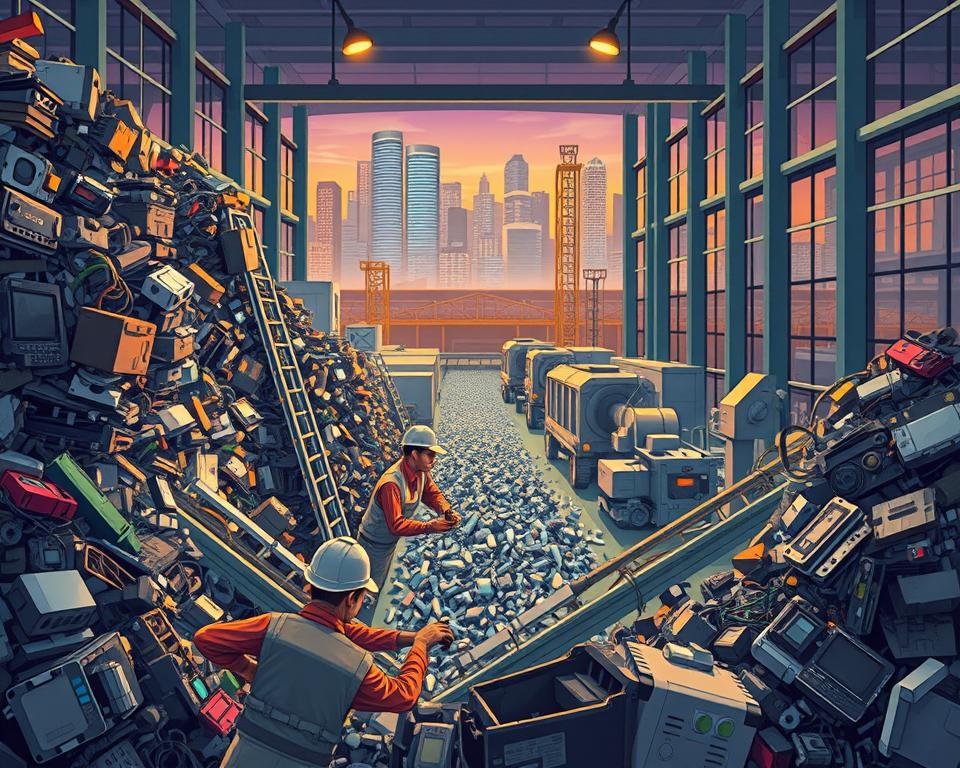
Did you know: Singapore’s 300+ e-waste collection points recover gold each year—enough for about 18,000 wedding rings? That impressive number shows the hidden value inside retired devices and why responsible disposal matters now. As devices become obsolete faster, e-waste management has shifted from a choice to a necessity for protecting the environment.

Singapore’s government created a streamlined system combining drop-off bins, quarterly collection drives, and certified handlers like Advance Recycling. These channels keep toxins out of landfills and recover metals such as palladium and copper. Each smartphone or laptop that is https://www.advance-recycling.com/e-waste-recycling-in-singapore processed correctly avoids contamination of groundwater and soil.

This guide explains how to navigate Singapore’s e-waste ecosystem confidently. Learn what’s recyclable, how to wipe data securely, and when to use bins vs. pickups. See how professional services make compliance easy and support national sustainability targets.

Key Takeaways

  • There are 300+ dedicated e-waste points across Singapore
  • National rules support safe material recovery
  • Discarded devices contain recoverable precious metals
  • Certified recyclers provide doorstep pickups
  • Correct disposal prevents soil and water contamination

Electronic Recycling in Singapore: An Overview

From smartphones to refrigerators, retired technology is Singapore’s fastest-growing waste stream. They carry both value and hazards requiring specialized handling. Right methods safeguard health and nature and recover valuable materials.

Advance Recycling - ewaste recycling

Defining E-Waste

E-waste is any electrical or electronic device that’s no longer in use. This includes everyday items like laptops, printers, and air conditioners. There’s value inside—for instance, a washing machine can yield copper for about 40 cables.

Still, these devices pose risks. Lead solder and mercury switches can poison groundwater if dumped improperly. Certified processors such as Advance Recycling apply advanced techniques to separate reusable materials from hazardous parts.

Advantages of Responsible E-Waste Handling

Responsible management keeps toxic chemicals out of landfills. It also recovers rare metals for new products, reducing mining needs. Per tonne of e-waste processed, typical savings include:

  • ~17 tonnes of raw extraction
  • roughly 3,000 liters of water at risk of contamination
  • approximately 400 kg of GHG emissions

Advance Recycling leads Singapore’s efforts through secure data wiping and material recovery. They aim for ~98% of components to be reused or neutralized safely. That model supports ecosystems and economic efficiency.

Understanding E-Waste Regulations in Singapore

Singapore’s e-waste management system operates under precise legal frameworks designed to balance convenience and environmental safety. From July 2021, NEA mandates retailer take-back when customers purchase new items, cross-brand included. This 1-for-1 rule applies to categories such as printers, lamps, and ICT equipment.

The NEA authorizes specific collection channels to streamline disposal. Approved e-bins take small gadgets and batteries; larger items need scheduled pickups. Over 800 locations across the island accept regulated waste, ensuring accessibility for residents and businesses.

Licensed processors like Advance Recycling follow strict protocols to meet these standards. Facilities use NEA-approved methods to recover materials and neutralize toxics. Every stage—from wiping to extraction—undergoes documented audits.

Key aspects of the regulatory framework include:

  • Retailer participation in take-back is mandatory
  • Devices categorized across consumer, commercial, and industrial
  • Live tracking of waste flows end to end

These measures deter illegal dumping and support up to 90% repurposing. Alignment with standards like the Basel Convention keeps Singapore a regional leader.

Advance Recycling’s Edge in Singapore

Singapore’s tech-waste challenge calls for partners blending expertise and sustainability. A leader at the forefront is transforming end-of-life handling through smarter recovery.

Company Profile and Commitment

Since 2010, Advance Recycling has pioneered closed-loop systems for tech materials. They run a 12,000-sq-ft site processing 8+ tonnes daily via IR and electrostatic separation. Such systems identify reusable components at ~99.8% accuracy to maximize recovery.

The team’s expertise spans secure data destruction and chemical neutralization. Certified specialists dismantle devices to preserve ~94% of precious metals. Such precise working methods meet standards and recover materials.

Highlights include:

  • On-site corporate shredding via mobile units
  • Blockchain-enabled flow tracking
  • Artificial-intelligence sorting solutions

These solutions support zero-waste targets and household contributions to sustainability goals. By turning retired devices into inputs, the loop in Singapore’s circular economy tightens.

Safe Electronics Recycling: Singapore Guide

Singaporeans discard over 60,000 tonnes of tech waste yearly, but proper handling turns this into valuable resources. Whether dealing with one phone or a full office refresh, the city-state offers tailored solutions that protect both ecosystems and sensitive data.

First, sort items by size and category. Remove all batteries—they require special handling at designated centers. For data-bearing items:

  • Use certified data-wiping software
  • If unsure, physically destroy hard drives
  • Keep chargers and cables separate

Public bins accept smaller items like phones and tablets. Check openings match your device’s dimensions – standard slots measure 50cm wide. Bigger items need other channels.

Specialist Collection Services

Scheduled pickups from Advance Recycling simplify bulk disposal. The team manages:

  • Same-day documentation
  • Secure, on-premise data destruction
  • Correct hazardous materials classification

These services are vital for office refreshes and multi-appliance changes. Unlike bins, items of any size are accepted with full compliance.

Typical Electronics You Can Recycle

Singapore households and businesses dispose of over 150 types of tech devices annually. They range from palm-sized gadgets to refrigerator-sized appliances, each requiring specific handling. Sorting correctly boosts recovery and ensures compliance.

Small Appliances and Entertainment Gear

Small appliances dominate Singapore’s tech waste stream. Microwaves and air fryers blend metals with heat-resistant plastics. Hair straighteners and electric toothbrushes contain copper wiring and lithium cells.

Device Type Illustrations Primary Materials Typical Processing
Kitchen Tech Blenders and rice cookers Stainless steel, glass Shredding followed by sorting
Entertainment Gear Game consoles and speakers Gold and rare earths Careful dismantling
Climate Control Air purifiers, standing fans Aluminum, copper coils Magnetic separation techniques

Managing Large Appliances

Bulky items like refrigerators require specialized protocols. Advance Recycling’s team uses climate-controlled trucks to transport these appliances safely. Facilities remove refrigerants and separate steel from insulation.

Oversized devices account for 38% of recovered metals in Singapore. Experts neutralize hazardous components and channel reusable parts back into production. This converts retired equipment into feedstock for new goods.

Finding Collection Points and Bins

Singapore’s disposal network offers multiple pathways for tech items, blending accessibility with environmental responsibility. Specialized containers and community drives simplify participation.

Public Drop-Off Points

Over 466 green RENEW bins serve as primary disposal hubs across 418 locations. You’ll find these bright bins in supermarkets, parks, and government sites. Accepted size is 47×12×47 cm, ideal for phones, cables, small kitchen items.

Method Locations Item Size Use Case
RENEW Bins 418 locations Small devices Routine drop-offs
Community Drives Residential estates Medium items Community events
Retail Counters Partner stores Portable tech Errand runs

Neighborhood and Retail Collection

Quarterly neighborhood drives collect outdated devices. Some retailers accept items at service counters for convenient disposal. For telecom gear, M1 partners with Virogreen for drop-offs.

Digital tools streamline location searches. Use NEA pages or ALBA STEP UP for real-time mapping. However, these options struggle with bulkier appliances or sensitive data removal.

For comprehensive solutions, Advance Recycling fills the gaps. They provide:

  • Doorstep collection for oversized items
  • Certified data sanitization and destruction
  • End-to-end documentation

Environmental and Health Benefits of Proper Recycling

Singapore’s tech-driven progress creates a hidden opportunity beneath piles of retired devices. Responsible disposal methods transform potential hazards into resources that protect ecosystems while fueling sustainable manufacturing.

Protecting Resources and Health

Every smartphone and laptop contains trace amounts of gold, silver, and palladium. Processed professionally, these metals re-enter production. Mishandling releases lead and mercury into groundwater, threatening marine life and drinking supplies.

Advance Recycling’s working methods prevent toxic leakage while recovering 97% of reusable components. IR-based sorting isolates precious materials precisely. This method avoids ~14 kg of mining waste per device.

Proper treatment protects air quality by avoiding incineration of plastics. Certified facilities neutralize brominated flame retardants that cause respiratory issues. These steps reduce health risks and conserve finite resources.

Frequently Asked Questions

Which items count as e-waste in Singapore?

E-waste covers phones, laptops, printers, microwaves, and home appliances like vacuums and AC units. Batteries, bulbs, and small electronic gadgets are included too.

Do fines apply for improper e-waste disposal?

NEA in Singapore enforces strict e-waste rules. Fines may apply if regulated items are discarded improperly because they need specialized handling.

Can damaged electronics still be recycled?

Certainly. Damaged or obsolete gear—including fans, ovens, and shredders—is accepted. Components are safely dismantled to recover metals and other reusable materials.

How do I dispose of bulky items (e.g., fridges)?

Drop bulky items at designated points or book a professional pickup. ALBA E-Waste and similar providers offer doorstep collection for large appliances.

How do recycling bins for small electronics work?

Bright bins at community centers, retailers, or offices accept small items like cables, keyboards, handhelds. Verify accepted materials on the bin label first.

Why separate battery recycling?

Toxic battery chemicals can leach into soil and water. Specialized collection boxes at supermarkets or electronics stores ensure safe processing to recover lithium, nickel, and other metals.

How is my data handled on recycled devices?

Reputable programs (e.g., StarHub RENEW) apply certified wiping methods. Manually clear personal data before turning in phones, computers, or drives.

Are there incentives for recycling electronics in Singapore?

Some retailers offer trade-in discounts or vouchers when you return old gadgets. Brand-led programs such as Panasonic’s appliance initiative promote sustainability.

Why Ewaste Recycling Services Protect Natural Resources

A Practical Guide to Recycle E-Waste Properly in Singapore<\h1>

Quick stat: Singapore has over 300 e-waste drop-off points recover gold each year—enough for about 18,000 wedding rings? That impressive number highlights the hidden value inside retired devices and the urgent need for responsible disposal. As tech lifecycles shorten, e-waste management has shifted from a choice<\em> to a necessity<\span><\em> for protecting the environment.<\p>

Singapore’s government created a streamlined system that blends public drop-off bins, quarterly drives, and certified handlers such as Advance Recycling. These channels keep toxins out of landfills and recover metals such as palladium and copper. Every properly Advance Recycling – ewaste recycle processed smartphone or laptop avoids contamination of groundwater and soil.<\p>

This guide explains how to navigate Singapore’s e-waste ecosystem confidently. You’ll learn to identify recyclable items, wipe personal data securely, and choose between neighborhood bins or scheduled pickups. Discover how professional services simplify compliance with local regulations while supporting the nation’s sustainability goals.<\p>

Key Takeaways<\h3>

  • Singapore offers more than 300 e-waste drop-off locations<\li>
  • National regulations ensure safe extraction of valuable materials<\li>
  • Retired gadgets include recoverable high-value metals<\li>
  • Doorstep collection is available via certified handlers<\li>
  • Responsible disposal reduces pollution risks<\li>
    <\ul>

    Introduction to Electronic Recycling in Singapore<\h2>

    From smartphones to refrigerators, discarded tech forms Singapore’s fastest-growing waste stream. They pack valuable materials and risks that need expert handling. Right methods safeguard health and nature and recover valuable materials.<\p>
    Advance Recycling - recycle electronics

    E-Waste Explained<\h3>

    E-waste is any electrical or electronic device that’s no longer in use. Examples include laptops, printers, and air conditioners. Many contain valuable metals – a single washing machine holds enough copper to make 40 power cables.<\p>

    However, these devices also carry risks. Improper dumping can leach lead and mercury into groundwater. Certified processors such as Advance Recycling apply advanced techniques to separate reusable materials from hazardous parts.<\p>

    Benefits of Proper Electronic Disposal<\h3>

    Responsible handling keeps toxins out of landfills. It also recovers rare metals for new products, reducing mining needs. Per tonne of e-waste processed, typical savings include:<\p>

    • about 17 tonnes of virgin extraction avoided<\li>
    • roughly 3,000 liters of water at risk of contamination<\li>
    • approximately 400 kg of GHG emissions<\li>
      <\ul>

      Advance Recycling supports Singapore’s efforts with secure data wiping and advanced recovery. They aim for ~98% of components to be reused or neutralized safely. This method supports ecological balance and economic efficiency.<\p>

      Understanding E-Waste Regulations in Singapore<\h2>

      Singapore’s e-waste management system operates under precise legal frameworks designed to balance convenience and environmental safety. From July 2021, NEA mandates retailer take-back when customers purchase new items, cross-brand included. This 1-for-1 rule applies to categories such as printers, lamps, and ICT equipment.<\p>

      The NEA authorizes specific collection channels to streamline disposal. E-bins accept small items and batteries; bulky devices go via scheduled collection. There are 800+ islandwide locations accepting regulated waste for easy access.<\p>

      Licensed processors such as Advance Recycling adhere to strict protocols. They apply NEA-approved techniques for recovery and neutralization. Each step, from wiping to extraction, is audit-documented for transparency.<\p>

      Key aspects of the regulatory framework include:<\p>

      • Mandatory retailer participation in take-back programs<\li>
      • Clear categorization of devices into consumer, commercial, and industrial classes<\li>
      • Real-time tracking of waste flows from collection to processing<\li>
        <\ul>

        They curb illegal dumping and enable repurposing of up to 90% of components. Alignment with standards like the Basel Convention keeps Singapore a regional leader.<\p>

        The Advance Recycling Advantage: Expertise and Sustainability<\h2>

        Singapore’s battle against tech waste requires partners who combine technical mastery with environmental vision. Leading the way is a team reshaping end-of-life handling with intelligent recovery.<\p>

        Company Profile and Commitment<\h3>

        Advance Recycling has pioneered closed-loop tech-material systems since 2010. A 12,000-sq-ft facility processes 8+ tonnes per day with IR scanners and electrostatic separators. This technology identifies reusable components<\em> with ~99.8% accuracy—vital for high recovery.<\p>

        The team specializes in secure data destruction and chemical neutralization. Certified specialists dismantle devices using methods that preserve 94% of precious metals. This precision working<\em> process meets Singapore’s strict safety standards while recovering resources for manufacturing.<\p>

        Notable innovations include:<\p>

        • Mobile shredders for on-premise corporate collections<\li>
        • Blockchain-tracked material flows<\li>
        • Artificial-intelligence sorting solutions<\li>
          <\ul>

          These solutions<\em> help businesses achieve zero-waste targets and households contribute to national sustainability<\span><\em> goals. By transforming discarded gadgets into raw materials, Advance Recycling closes the loop in Singapore’s circular economy.<\p>

          How to Recycle Electronics Safely in Singapore<\h2>

          Over 60,000 tonnes of tech waste are discarded yearly; proper handling turns it into resources. Whether dealing with one phone or a full office refresh, Singapore provides solutions that protect ecosystems and sensitive data.<\p>

          Begin by sorting by size and device type. Take out batteries; they need designated handling. For data-bearing items:<\p>

          • Use certified data-wiping tools<\li>
          • Physically destroy drives if uncertain<\li>
          • Keep chargers and cables separate<\li>
            <\ul>

            Public bins accept smaller items like phones and tablets. Confirm your device fits; standard slots are about 50 cm wide. Bigger items need other channels.<\p>

            Professional Pickup Services<\h3>

            Advance Recycling streamlines bulk disposal via scheduled pickups. Specialists handle:<\p>

            • Documentation issued the same day<\li>
            • On-site secure data destruction<\li>
            • Proper classification of hazardous materials<\li>
              <\ul>

              These services are vital for office refreshes and multi-appliance changes. Unlike bins, items of any size are accepted with full compliance.<\p>

              Common E-Waste Categories in Singapore<\h2>

              Households and businesses discard 150+ tech device types annually. These range from palm-sized gadgets to refrigerator-sized units, each needing specific handling. Proper sorting ensures maximum material recovery and regulatory compliance.<\p>

              Small Appliances and Entertainment Gear<\h3>

              Compact appliances are prominent in the waste stream. Kitchen tools like microwaves and air fryers mix metals with heat-resistant plastics. Personal care items (straighteners, electric toothbrushes) include copper wiring and lithium batteries.<\p>

              Class<\th>

              Sample Items<\th>

              Primary Materials<\th>

              Processing Method<\th><\tr>

              Kitchen Tech<\td>

              Blenders, rice cookers<\td>

              Glass, stainless steel<\td>

              Shred and sort<\td><\tr>

              Entertainment Gear<\td>

              Speakers, game consoles<\td>

              Gold, rare earth metals<\td>

              Detailed dismantling<\td><\tr>

              Climate Control<\td>

              Fans and air purifiers<\td>

              Aluminum and copper coils<\td>

              Magnetic separation<\td><\tr>
              <\tbody>
              <\table>

              Managing Large Appliances<\h3>

              Bulky items like refrigerators require specialized protocols. Teams use climate-controlled trucks to move these appliances<\em> safely. Facilities remove refrigerants and separate steel from insulation.<\p>

              Oversized devices account for 38% of recovered metals in Singapore. Professional services ensure toxic components get neutralized while reusable parts re-enter manufacturing cycles. This converts retired equipment into feedstock for new goods.<\p>

              Finding Collection Points and Bins<\h2>

              Singapore’s disposal network offers multiple pathways for tech items, blending accessibility with environmental responsibility. Specialized containers and community drives simplify participation.<\p>

              Public Drop-Off Points<\h3>

              There are 466+ green RENEW bins across 418 locations. These bright receptacles appear in supermarkets, parks, and government buildings. Accepted size is 47×12×47 cm, ideal for phones, cables, small kitchen items.<\p>

              Method<\th>

              Coverage<\th>

              Item Size<\th>

              Use Case<\th><\tr>

              RENEW Bins<\td>

              418 locations<\td>

              Compact devices<\td>

              Everyday drop-offs<\td><\tr>

              Estate Drives<\td>

              Residential estates<\td>

              Mid-sized items<\td>

              Neighborhood events<\td><\tr>

              Retail Take-Back<\td>

              Retail partners<\td>

              Small portable tech<\td>

              Shopping trips<\td><\tr>
              <\tbody>
              <\table>

              Home & Counter Collection<\h3>

              Residential areas hold quarterly drives for outdated devices. Retailers like City Square Mall accept items at service counters, integrating disposal with errands. For telecom gear, M1 partners with Virogreen for drop-offs.<\p>

              Apps and sites simplify searching for bins. NEA sites and ALBA’s STEP UP app offer real-time bin maps. They aren’t ideal for large items or secure data tasks.<\p>

              For full-service needs, Advance Recycling bridges the gaps. Offerings include:<\p>

              • Doorstep removal of oversized items<\li>
              • Certified data destruction<\li>
              • Full-process documentation<\li>
                <\ul>

                Health & Environmental Gains from Recycling<\h2>

                Beneath retired devices lies opportunity in a tech-driven Singapore. Responsible methods convert hazards into resources, protecting ecosystems and supporting sustainable manufacturing.<\p>

                Guarding Resources, Protecting Lives<\h3>

                Phones and laptops contain traces of gold, silver, and palladium. Professional processing returns these metals to production. Mishandling can release lead and mercury into groundwater, risking marine life and water supplies.<\p>

                Advance Recycling’s working<\em> methods prevent toxic leakage while recovering 97% of reusable components<\span><\em>. Infrared sorting isolates precious materials with high precision. This approach avoids 14kg of mining waste per recycled device.<\p>

                Proper treatment also safeguards air<\em> quality by preventing incineration of plastic casings. Facilities neutralize brominated flame retardants tied to respiratory risks. These steps reduce health risks and conserve finite resources.<\p>

                FAQ<\h2>

                What items qualify as e-waste in Singapore?<\h3>

                E-waste includes devices like mobile phones, laptops, printers, microwaves, and home appliances such as vacuums or air conditioners. Batteries, bulbs, and small electronic gadgets are included too.<\p>

                <\div><\div><\div>

                Do fines apply for improper e-waste disposal?<\h3>

                Singapore’s National Environment Agency (NEA) enforces strict guidelines. Improperly discarding regulated items like printers or batteries may result in fines, as these materials require specialized handling to avoid environmental harm.<\p>

                <\div><\div><\div>

                Can damaged electronics still be recycled?<\h3>

                Absolutely. Centers accept damaged or obsolete gear, such as non-functional fans, ovens, and shredders. Technicians safely dismantle components to recover metals and reusables.<\p>

                <\div><\div><\div>

                How do I dispose of bulky items (e.g., fridges)?<\h3>

                Use designated points or schedule a professional pickup for bulky items. Providers such as ALBA E-Waste handle doorstep pickup of large appliances.<\p>

                <\div><\div><\div>

                How do I use the bins for small items?<\h3>

                Use bright bins in community centers, shops, or offices for cables, keyboards, and small gadgets. Check the bin’s label for accepted materials before depositing.<\p>

                <\div><\div><\div>

                Why separate battery recycling?<\h3>

                Batteries include toxic chemicals that may leach into soil and water. Use specialized collection boxes at supermarkets/electronics stores for safe processing and metal recovery.<\p>

                <\div><\div><\div>

                How is my data handled on recycled devices?<\h3>

                Reputable recyclers like StarHub’s RENEW program use certified data-wiping methods. For added security, manually delete personal information before handing over phones, computers, or storage drives.<\p>

                <\div><\div><\div>

                Any perks for recycling old electronics?<\h3>

                Certain retailers provide trade-in discounts or vouchers for old gadgets. Programs like Panasonic’s appliance recycling initiative also promote sustainability through brand-led partnerships.<\p>

                <\div><\div><\div><\section>

Healthcare Packaging Improvements with a Recycling Service for Plastic

Total Recycling Service by Advance Recycling

Each year, Singapore produces more than 7.7 million tons of waste, but just 60% is recycled. Companies are essential to narrowing this gap—and Advance Recycling delivers the expertise to make it happen.

As industries grow, so does the need for smarter waste handling. Our programs follow Singapore’s Zero Waste Masterplan, guaranteeing compliance and maximizing material recovery. From collection to processing, www.advance-recycling.com streamline sustainability for corporate clients.

Businesses depend on us for challenging streams including electronics, plastics, and metals. Backed by modern tech and clear reporting, we turn waste into value—efficiently and responsibly.

Key Takeaways

  • Only 60% of Singapore’s annual waste is recycled, leaving significant room to improve.
  • Advance Recycling delivers comprehensive, end-to-end services for companies.
  • Services comply with Singapore’s strict environmental regulations.
  • Specializes in challenging materials like e-waste and industrial byproducts.
  • Focuses on transparency and efficiency in resource recovery.

About Advance Recycling — Leading in Sustainability

Backed by 15+ years in Singapore’s waste industry, we pioneer sustainable solutions. We handle complex materials ranging from e-waste to industrial scrap, ensuring resources re-enter the economy responsibly.

Advance Recycliny

Our Team

Advance Recycling combines deep industry knowledge with cutting-edge technology. Our qualified team is trained in circular economy methods and waste handling, meeting Singapore NEA standards.

  • More than 15 years of operational excellence in Singapore.
  • Specialized HAZMAT management training.
  • Active participants in SG Clean and Zero Waste initiatives.

What We Stand For

Our commitment is to transparency and innovation. Partnering with the Sustainable Singapore Blueprint, we transform waste into value and protect the environment.

  • Core Values: Integrity, accountability, eco-friendly practices.
  • Goals: Lower landfill use and improve resource recovery.

Defining a Full Recycling Service

Singapore businesses face increasing pressure to manage waste efficiently. A end-to-end recycling service makes the process straightforward, from pickup to end processing. It returns materials to production and reduces dependence on landfills.

All-Inclusive Waste Solutions

We deliver a complete system that includes:

  • Collection: Timetabled pickups to keep removal consistent.
  • Sorting: Sophisticated separation for plastics, metals, and e-waste.
  • Treatment: Safe conversion into reusable raw materials.
  • Compliance Docs: Detailed reports for regulatory compliance.

Here’s how standard and tailored plans differ:

Aspect Baseline Plan Customized Plan
Frequency Once per week Flexible (daily or monthly)
Materials Core items (paper, plastic) Specialized (e-waste, chemicals)
Reporting Standard summaries Comprehensive, audit-ready analytics

Customized for Business and Industry

Offices and factories have different needs. Industrial sites benefit from volume pricing; corporates value convenience. For example:

  • A food manufacturer recycles 5 tons of packaging monthly, cutting costs by 20%.
  • An electronics plant processes 500+ devices each quarter securely to meet NEA standards.

Real-time tracking features make audits simple. From pickup weights to final disposal, everything is documented.

Accepted Materials

From old smartphones to factory scrap, many materials can get a second life. We process varied streams for safe and efficient recovery. Our processes meet Singapore’s strict environmental standards.

Electronics Recycling Done Right

Electronics often include hazardous items like mercury and lead. We process responsibly:

  • CRT monitors and lithium-ion batteries (tested for leaks).
  • Data devices (NEA-certified destruction).
  • Nickel-cadmium batteries and circuit boards (dismantled manually).

Special equipment extracts reusable metals and neutralizes toxins.

Plastics & Metals — From Scrap to Reuse

Infrared scanners let our systems identify plastic types (PET, HDPE, LDPE). Metal recovery reaches 98% purity using electromagnetic separation. Frequent materials are:

  • Manufacturing-derived ABS plastic.
  • Aluminum and steel alloys (melted for industrial reuse).

Specialized Items: Batteries, Steel, and More

Complex items need tailored solutions:

  • Lead-acid batteries: Acid neutralization and lead recovery.
  • Stainless steel sorted by grade for smelting.
  • Mercury devices processed via sealed vacuum extraction.

A documented chain of custody ensures compliance for each material.

How Our Full Service Works

A structured process is the start of efficient waste handling. From office paper to industrial scrap, we ensure responsible recovery. Our three-step approach maximizes efficiency and meets NEA standards.

Step 1: Waste Collection and Segregation

We optimize routes with GPS-tracked vehicles and weight sensors. Teams use color-coded bins to separate plastics, metals, and hazardous items. That cuts contamination and accelerates disposal.

  • Smart bins: Sensors alert crews when bins are full.
  • NEA compliance: Labels aligned with NEA waste guidelines.

Step 2: Safe Transportation and Handling

Hazardous materials like batteries are packed in triple-layer containers. Real-time tracking ensures secure transit to facilities. All drivers are trained on spill response.

  • Digital logs: Capture weights and collection times.
  • Temperature control: Stops chemical degradation during transport.

Step 3: Advanced Recycling and Recovery

Infrared scanners sort plastics by type, while magnets extract metals. Our aluminum scrap recovery reaches 98%, 20% higher than average. All steps are documented for auditability.

  • Recovery reports: Display recovery rates by material category.
  • Closed-loop systems: Return materials to local production.

This comprehensive solution turns waste into resources and reduces landfill dependence. Companies benefit from transparency and compliance throughout.

Advantages of Partnering with Advance Recycling

Waste solutions can be sustainable and cost-smart. Working with us unlocks both financial and environmental benefits, with full adherence to Singapore’s strict rules.

Cost-Smart, Eco-Friendly Programs

Our waste-to-energy programs cut operational costs by up to 30%. For instance, 1 ton of plastic can power 50 HDB flats for one day.

Businesses also gain carbon credits through certified e-waste disposal. This turns compliance into a revenue stream, eligible within Singapore’s carbon trading mechanisms.

Regulatory Compliance Made Simple

We streamline compliance with the Resource Sustainability Act. Digital audit trails provide 24/7 access to compliance records, covering pickup through final processing.

We provide the following solutions:

  • Automatic reports tailored for NEA inspections.
  • Hazardous material handling certified by SCAL.
  • Real-time tracking to prevent regulatory penalties.

Serving Businesses Across Industries

Every sector needs tailored waste strategies; one size doesn’t fit all. At Advance Recycling, we adapt our systems to handle unique challenges, covering high-volume scrap and secure office paper disposal alike.

Solutions for Industry

Factories need robust solutions for heavy waste streams. Our closed-loop systems recover 95% of automotive metal scrap, while semiconductor clients benefit from hazardous material containment.

  • Semiconductor streams: Secure management of wafers and chemical byproducts.
  • Automotive scrap: Melt, reform, and reuse steel alloys.
  • Tailored pickup schedules: Daily pickups for construction sites vs. weekly for warehouses.

Retail and Office Waste Management

Retailers face packaging overload, while offices prioritize data security. Cardboard compactors and secure shredders are deployed.

Program Retail Clients Office Sector
Frequency Two times per week Monthly
Main Materials Plastic film, boxes Paper, e-waste
Key Features Balers for packaging IMDA-grade data destruction

Fortune 500 headquarters use our audit-ready tracking. Even F&B businesses cut costs by 25% with optimized waste schedules.

Why Sustainability Matters in Recycling

Singapore’s limited landfill space makes sustainable waste practices critical. Semakau Landfill is projected to reach capacity by 2035, improper disposal increases ecological risk and costs. Responsible recovery converts this challenge into opportunity.

Reducing Environmental Risks

Recycling one ton of plastic averts 2kg of marine debris. Our programs divert 3,000+ tons annually—equivalent to clearing 25 football fields of ocean waste.

Hazardous materials like lithium batteries pose fire risks if landfilled. Through certified processing, we neutralize these threats while recovering valuable metals.

Enabling the Circular Economy

Upcycling turns discarded electronics into urban furniture. Partner workshops repurpose circuit boards into benches at 15 HDB hubs across Singapore.

Tuas Nexus converts food waste to biogas, powering 200+ households each month. Closed loops extend material use and cut virgin inputs by 40%.

  • Yearly impact: 12,000 tons of CO2 cut via recovery programs.
  • Audited metrics: Third-party audits verify sustainability progress.
  • Community partnerships: Businesses and schools team up for cleanup efforts.

Technology that Powers Recycling

Modern recycling relies on smart systems to maximize efficiency and security. AI and blockchain are integrated in Singapore facilities for high-precision recovery.

Next-Gen Sorting & Processing

AI-powered optical scanners achieve 99.5% material purity—far surpassing manual sorting. These systems identify plastic types in milliseconds using hyperspectral imaging.

Partnering with NTU improves polymer recovery via enzymatic breakdown. Green chemistry lets us extract raw materials without toxic byproducts.

  • Blockchain tracks materials from collection to resale markets
  • Electromagnetic separation achieves 98% metal recovery
  • Robotic arms handle hazardous items like lithium batteries

Data Security for E-Waste Disposal

Corporate IT assets require military-grade data wiping certified by IMDA. A three-pass overwrite meets Singapore’s strict cybersecurity standards.

Serialized destruction certificates are provided for audit trails. Devices go through:

  1. Physical inspection for data storage components
  2. Magnetic media degaussing
  3. End shredding down to 2mm particles

R&D teams test evolving methods to address encryption. This ensures compliance as storage technology evolves.

Proven Results

Proof from the field shows waste transformed into value. Clients include aerospace, retail, and property—each with measurable milestones. Below, two case studies highlight innovative solutions and their impact.

Manufacturing Waste Reduction

Using our closed-loop system, ST Engineering’s aerospace division cut waste by *40%*. Metal scrap compactors and segregation training were implemented. Within a year, landfill reliance dropped sharply.

By recovering steel alloys, Keppel Shipyard saved *S$220k annually*. Electromagnetic separation reached 98% purity, converting scrap to reusable materials. These outcomes prove industrial waste can generate profit.

Sustainable Solutions for Retail Chains

Decathlon reached *100% compliance* across 15 Singapore outlets. We streamlined packaging waste collection and provided audit-ready reports. Green certification now boosts customer trust.

Mattress recycling at IKEA turns foam into urban furniture. CapitaLand diverted *98% of waste* from landfills across its properties. Both brands highlight retail’s role in circular economy efforts.

  • ST Engineering: Waste down 40% using training plus compactors.
  • Keppel: Metal recovery saved S$220k annually.
  • Decathlon SG: Full compliance across 15 outlets.
  • CapitaLand: Portfolio approaching near-zero landfill use.

Final Thoughts

Advance Recycling is an NEA-licensed leader in Singapore’s waste management sector. We tailor solutions to urban challenges, covering e-waste through industrial scrap.

Beyond compliance, businesses join the Green Plan 2030 mission. Schedule a complimentary waste audit now. For urgent needs, our team responds within 24 hours.

Each partnership cuts landfill reliance. Let’s build a cleaner, resource-efficient future for Singapore—together.

How Dragoprojects M&E Consultants Support Early Design Feasibility Studies

Singapore Mechanical & Electrical Advisors — DragoProjects

Curious why top Dragoprojects – M&E company shine? DragoProjects excels by blending their know-how with innovative solutions for their clients. They’re recognised leaders in M&E consultancy, proving focus to high standards in every area they touch.

The team stays a step ahead, navigating the complex world of mechanical & electrical services. They’re known for dependable, solid delivery, earning the respect of many. Choosing the right advisor is crucial in today’s building scene, since it can determine success or risk.

Singapore M&E Consulting Explained

M&E consulting plays a vital role in construction. It focuses on mechanical and electrical systems that modern buildings rely on. These areas include HVAC, lighting, plumbing, and electrical setups. M&E professionals ensure each part meets safety rules and helps buildings work their best.

M&E Services: A Quick Primer

M&E services bring together systems that make buildings safe, comfortable, and efficient. These include:

  • Heating, ventilation & air-conditioning (HVAC)
  • Electrical networks and lighting
  • Plumbing with fire-safety systems

Effective consultants design and deliver these systems. They ensure performance and longevity.

Dragoprojects - M&E consultants

Importance of M&E Services in Construction Projects

M&E services are essential to project outcomes. They drive efficiency and sustainability. They also reduce operating costs and environmental impact. Innovative M&E design is key to making modern buildings that meet today’s needs.

DragoProjects: Singapore M&E Consultancy

In Singapore, DragoProjects leads in M&E consultancy. Their services span multiple needs across clients. Experts focus on innovative solutions for efficient, sustainable delivery.

What DragoProjects Offers

They cover end-to-end M&E design, management, and consultancy. They work on residential, commercial, or industrial projects, tailoring delivery to client requirements. Modern design/methods help ensure efficient, smooth projects.

Why DragoProjects?

Clients choose DragoProjects because of their solid reputation in the industry. A skilled engineering team solves complex challenges effectively. These engineers stick to deadlines and budgets, ensuring projects succeed and are sustainable.

Expert Engineers for M&E Solutions

DragoProjects boasts a highly skilled team of engineers. Each one has a lot of experience in mechanical and electrical systems. They are experts in project management, risk assessment, and meeting industry rules. Because of this, DragoProjects is a top M&E consultant in Singapore.

Qualifications of DragoProjects’ Engineers

DragoProjects engineers are highly educated. They carry certifications that verify M&E expertise. They keep learning to stay on top of new trends, enabling top-tier M&E solutions. They manage strict codes so projects comply locally.

Innovative M&E Solutions Offered

Their hallmark is innovative M&E. They aim to cut energy use and costs. They leverage advanced BMS and energy platforms. Such advances boost operations while aiding the environment. This leadership places DragoProjects at the forefront.

Why Hire Reliable M&E Consultants

Hiring reliable consultants like DragoProjects yields major benefits. They bring efficient planning/management expertise. Their guidance helps businesses address M&E challenges, confidently from start to finish.

Cost Control & Project Management

Cost-saving is a big plus when working with skilled M&E consultants. They manage time/resources to reduce spend. This expertise helps spot problems early, avoiding extra costs down the line.

Staying Compliant with Local Codes

Following local building codes is critical. With DragoProjects, your project meets all regulations. This reduces legal risk, streamlines inspections, and maintains schedule.

Singapore’s M&E Landscape: Who Leads?

In a crowded market, service quality and client happiness differentiate. DragoProjects shines with its team of m&e design experts who ensure quality solutions. A client-first focus ensures expert, tailored delivery.

DragoProjects Compared

They lead through innovation and advanced tech. Their unique approach to problem-solving sets them apart. Consequently, clients experience smoother processes and stronger outcomes, owing to consistent excellence.

Proof from Clients

Many clients report DragoProjects helped them past hurdles. These accounts highlight success and reinforce their leadership.

Navigating Complex Commercial Renovations

Working on commercial renovations means dealing with many tricky parts. Strict regulations apply while operations must continue. To handle these issues well, it’s smart to team up with expert engineers in mechanical and electrical (m&e) fields.

Typical Renovation Challenges

Common challenges include:

  • Code Compliance: Tracking all codes and rules is challenging.
  • Operational Disruptions: The work might get in the way of the business’s daily tasks.
  • Integration with Existing Systems: New updates must fit in perfectly with what’s already there.

Mitigating Hidden Costs in Renovation Projects

Unexpected costs are a big worry in renovation work. Getting help from experienced m&e pros can uncover hidden problems early. They use smart ways to avoid surprises:

  1. Deep audits of existing M&E
  2. Making plans to adapt to new design needs or rule changes
  3. Creating budgets that really cover everything needed for the project

Project Management & Communication Essentials

Project management and communication are key for success in electrical and mechanical consulting. Clear communication keeps everyone aligned. It fosters teamwork and readiness for issues. It enables idea-sharing and informed decisions as work progresses.

Keeping Everyone Aligned

How engineers, contractors, and clients work together can really affect a project. Open talks reduce mix-ups and help everyone work together better. Effective communication involves:

  • Regular updates to keep all stakeholders informed
  • Using up-to-date collaboration tools
  • Defined channels for questions/feedback

PM Tactics that Deliver

Smart management handles M&E challenges. Successful strategies include:

  1. Defining what the project needs to accomplish
  2. Plans to handle risks and challenges
  3. Regular progress reviews with adaptive changes

DragoProjects demonstrates how careful PM and strong communication enhance M&E outcomes in Singapore.

Innovative M&E Solutions for Your Business

Modern businesses rely on innovative M&E solutions to keep pace. They know each project is unique. They use special approaches to increase efficiency and success.

Customized Design Approaches for Unique Projects

DragoProjects excels at creating custom design strategies. These align to project-specific needs. Such solutions drive efficiency and meet client goals. Customisation helps by:

  • Surfacing unique requirements
  • Enhancing usability and function
  • Enabling flexibility and future growth

Make Systems Future-Ready

As tech advances, businesses need to update their systems. DragoProjects – M&E consultants work on making sure your systems can evolve. It allows smooth upgrades and tech adoption. Planning ahead helps by:

  1. Lowering costs on outdated systems in the future
  2. Reducing energy use and increasing eco-friendliness
  3. Keeping pace with evolving codes

Innovation remains a core commitment. They deliver robust, flexible systems. It lays a foundation for future growth.

The Bottom Line

For Singapore M&E services, DragoProjects is a top choice. They’re committed to innovation, quality, and client satisfaction. This makes sure clients get top-notch M&E advice. A specialist team supports complex renovation needs.

Services are tailored to clients, with local compliance and strong management. This careful planning helps avoid problems and makes projects run smoother.

When you choose DragoProjects, you get expert advice for a smoother project journey. Their strong reputation places them at the forefront of Singapore M&E.

Common Questions

What M&E services are available from DragoProjects?

DragoProjects provides a broad suite of services. This includes system design, PM, and tailored consultancy. All services are tailored for client-specific M&E needs.

How do consultants increase building energy efficiency?

DragoProjects focuses on smarter building operation. They employ innovative design with advanced energy systems. These efforts make buildings more efficient and sustainable. Long-term OPEX is reduced as well.

What makes DragoProjects the right M&E choice?

Pick DragoProjects to select excellence. With a strong track record and skilled engineers, they lead. They keep to time/budget, drive satisfaction, and align to sustainability.

What qualifications do DragoProjects’ engineers possess?

DragoProjects’ engineers are highly trained and come with broad experience. They specialise in M&E design, PM, and standards compliance. Expertise supports top guidance end-to-end.

How can hiring reliable M&E consultants save costs?

Choosing reliable M&E consultants like DragoProjects leads to major cost savings. They provide strategic planning with strong oversight. Delays and surprises are reduced as budgets are optimised.

What sets DragoProjects apart in Singapore?

Customer focus sets DragoProjects apart. Quality delivery and responsive service earn strong feedback.

What are some common challenges in commercial renovations?

Common hurdles include strict regulations, business continuity, and precise service estimates. They overcome these via planning and clear comms.

Is communication important for M&E projects?

Communication is key in M&E projects for seamless coordination and addressing issues early. It streamlines decisions and keeps phases on track.

What does future-proofing M&E systems involve?

Future-proofing means designing systems that grow with technological and regulatory changes. This approach helps maintain efficiency and performance over time.

Why Outsource Tax Planning Services? San Antonio’s Expert Insights

The dynamic city of San Antonio’s Leading Fiscal Strategy Specialists Revealed

Have you learned that more than 50 years of proficiency in tax planning can substantially boost your fiscal approach? Stanush Tax, Income & Bookkeeping Services – established in 1973 – has experienced three generations of family ownership. This extensive background has permitted them to adapt to the ever-changing monetary environment. In today’s complex world, identifying a trustworthy tax consultant in San Antonio is of utmost significance.

This article highlights the top fiscal experts in San Antonio. It focuses on organizations that are experts in tax planning for different industries. Upon reviewing 306 tax service firms, only 10 were chosen as our top picks – tax planning advisor San Antonio. Whether you’re earning a high income or running a business, engaging veteran consultants can significantly impact your fiscal well-being.

Grasping the Significance of Fiscal Strategy

Tax structuring is crucial for persons and companies desiring to improve their monetary condition. A sound tax strategy helps in reducing liabilities and increasing savings. It secures tax efficiency, resulting in financial stability and better resource management. The benefits of fiscal strategy go well past simple cost reduction; they include enhanced cash flow and access to tax deductions that can greatly influence economic performance.

The Benefits of Effective Tax Planning

A well-crafted tax strategy offers multiple advantages:

  • Significant savings: Active management of tax benefits optimizes financial resources.
  • Improved cash flow: Comprehending tax effects supports more effective budget planning.
  • Entry to deduction opportunities: Recognizing deductibility criteria leads to expanded saving options.
  • Purposeful asset allocation: An intelligently crafted plan synchronizes funds with individual objectives.

Usual Tax Structuring Tactics

San Antonio residents often use various strategies for tax efficiency:

  • Income splitting: Allocating revenues over time optimizes tax outcomes.
  • Strategies for postponing taxes: Techniques like Roth conversions reduce lifetime tax liabilities and boost retirement savings.
  • Application of tax incentives: Using qualifying tax credits delivers substantial economic benefits.
  • Investment distribution: Customizing investment strategies based on risk tolerance can lower risks and potentially increase returns.

Opting for the Correct Tax Structuring Expert

Opting for a tax consultant is an essential move towards efficient fiscal planning. In San Antonio, locals encounter distinct obstacles given the regional tax rules and fluctuating property assessments. It is imperative to weigh multiple aspects in selecting a fiscal strategist. They should provide tailored support based on individual financial needs.

Key Considerations in Choosing a Fiscal Consultant

When selecting a tax planning advisor in San Antonio, consider the following:

  • Advisor qualifications: Look for certifications like CPA, EA, or CFP. These show a commitment to professional standards and ongoing education.
  • Monetary proficiency: Assess the advisor’s experience with complex tax situations, essential for high net worth individuals.
  • Customer testimonials: Check testimonials and feedback to gauge the advisor’s effectiveness and client satisfaction.
  • Understanding local tax laws: A deep knowledge of San Antonio’s tax regulations is key for effective tax planning.

tax planning advisor San Antonio

Credentials and Experience

Qualifications are key in distinguishing advisors. Nearly 70% of monetary consultants hold CFP® designations, establishing a superior level of proficiency. Patrons are encouraged to find consultants who understand intricate tax codes and possess experience in Texas’s fiscal environment. Professionals experienced with affluent clients are adept at maneuvering through complicated scenarios.

Top Fiscal Strategists in San Antonio

In San Antonio, several firms stand out as top tax planning advisors, providing exceptional services to meet diverse client needs. Firms like ATKG, 1-800Accountant, Dimov Tax Specialists, and Summit Tax Associates have earned a strong reputation for their tax services. They are recognized for their thorough approach and dedication to client success.

Overview of Top Firms

ATKG claims over 35 years of background in the industry. Patrons appreciate their prompt service and expert conduct, achieving a reported 100% satisfaction level. Their forward-thinking strategy, emphasizing anticipatory planning and assistance, sets them apart. They are proficient in sophisticated fields such as estate and trust planning. With a versatile team, including team members like Eric, Hayley, and A.J. Sturm, they provide bespoke proficiency to suit individual client demands.

Parameters for Ranking Among the Best

This handpicked compilation of leading tax consultants in San Antonio was determined by multiple essential criteria:

  • Track Record: Organizations should possess an established record of superior service.
  • Patron Contentment: Positive reviews and testimonials are critical in assessing a firm’s tax services reputation.
  • Expertise: Firms should demonstrate expertise in specific areas such as estate planning, forensic accounting, and international tax compliance.
  • Certifications: Consultants are expected to possess proper accreditations such as CPA and CFP® credentials.
  • Community Engagement: Active involvement in local business and civic organizations enhances a firm’s standing in firm rankings.

Such standards enable individuals to approach their monetary futures with assurance. They know they are working with top-notch advisors who prioritize their best interests.

Tax Planning Services San Antonio

Amid San Antonio’s lively monetary arena, tax structuring solutions are crucial for both individuals and enterprises. A spectrum of services caters to different needs, assisting patrons in meeting fiscal duties and capturing tactical advantages.

All-Encompassing Fiscal Solutions

Tax structuring offerings in San Antonio include a wide variety of services. These include:

  • Individual tax strategy
  • Enterprise tax guidance
  • Sophisticated tax filing
  • Strategies tailored for high-income tax planning

These offerings are vital for affluent taxpayers prone to overpayment. Experts stress the need for proactive advice, noting that 80% of taxpayers feel they lack sufficient guidance from their CPAs. Engaging in proactive tax planning can yield substantial savings, with businesses potentially saving 20% annually through strategic planning.

Specialization in High-Income Tax Planning

For affluent individuals in San Antonio, tailored approaches can markedly cut tax burdens. Techniques include:

  • Leveraging permitted deductions and tax credits
  • Reorganizing trust structures to control fiscal rates
  • Real estate exemptions based on property use
  • Almsgiving to decrease taxable earnings
  • Investments in opportunity zones for tax deferral
  • Maximizing contributions to pension funds

These approaches allow clients to preserve a greater portion of their revenue. Agencies such as Patel Tax Advisors provide personalized sessions to steer clients through intricate fiscal regulations. Collaborating with seasoned tax experts enables both individuals and companies to secure significant savings.

The tax planning landscape is constantly changing. Access to thorough tax planning services in San Antonio is critical for both compliance and strategic advantage. With ongoing guidance and specialist insights, persons and companies can secure monetary prosperity.

Premium High-Earner Fiscal Planning in San Antonio

In the city, affluent individuals encounter distinct fiscal obstacles. They require customized guidance to maneuver through intricate tax codes and streamline their finances. Skilled risk control preserves their capital through methodical fiscal strategies.

Guidance for Affluent Individuals

Grasping fiscal reduction techniques is crucial for affluent earners. They can optimize deposits to retirement funds such as traditional IRAs up to $6,000 each year. For married couples or those over 50, this limit increases to $7,000. Individuals aged 50+ can supplement with $1,000 extra, further reducing taxable income.

Strategies for Minimizing Tax Liabilities

Affluent filers have various methods at their disposal for diminishing tax liabilities:

  • Channeling capital into tax-advantaged instruments to increase profits and decrease taxable revenue.
  • Using 401(k) contributions to delay taxes, thereby permitting investment expansion without immediate fiscal drain.
  • Making charitable contributions for significant deductions from taxable income.
  • Leveraging investment loss harvesting to neutralize capital gains and lower tax burdens.
  • Establishing trusts to distribute earnings to family members in lower tax brackets.

Staying informed with the latest tax-saving strategies is essential. Instructional materials such as newsletters and custom advisory services from companies like Rodriguez Reiffert & Co. are priceless. They assist affluent San Antonio residents in capitalizing on fiscal opportunities.

Tax Consultant in San Antonio

Effective fiscal strategy is critical for persons and companies seeking to enhance monetary benefits. In San Antonio, Summit Tax Associates stands at the forefront. They offer customized strategies, crafted to fit each client’s unique needs. Their team of veteran tax experts is dedicated to elevating client contentment via meticulous strategy and prudent decisions.

Focus on Summit Tax Associates

Summit Tax Associates is acclaimed for its superior tax structuring expertise in the San Antonio market. They offer an extensive suite of solutions to address diverse fiscal challenges. Their profound grasp of evolving tax legislation and dedication to staying current guarantee optimal strategies for clients.

Customer Reviews and Achievements

Success narratives from clients underscore the capabilities of Summit Tax Associates. Numerous testimonials highlight the firm’s skill in managing intricate tax challenges. From high-earning professionals aiming to cut tax liabilities to families needing comprehensive estate planning, the firm has repeatedly succeeded. These testimonials solidify Summit Tax Associates’ reputation as a trusted advisor in San Antonio, highlighting their dedication to excellence and client satisfaction.

Year-End Tax Planning San Antonio

As the calendar closes, residents and enterprises in San Antonio are urged to prioritize year-end tax structuring. This is a critical time to boost financial outcomes by taking strategic steps before deadlines. Knowing how to navigate this period ensures the full realization of tax benefits.

Guidelines for Optimizing Year-End Tax Advantages

Various approaches can notably influence end-of-year fiscal strategies in San Antonio. These include:

  • Advancing deductible expenses: Making charitable contributions or paying certain expenses before the year ends can ensure tax deductions.
  • Maximizing retirement contributions: Enhancing deposits into retirement schemes is fundamental. The IRS contribution limit for 401(k) plans in 2024 is $23,000, with an additional $7,500 catch-up contribution for those aged 50 and above.
  • Assessing asset allocations: Identifying underperforming assets for tax-loss harvesting can offset capital gains taxes, effectively lowering tax liabilities.
  • Meeting due dates: Monitoring cutoff dates for incentives and write-offs is essential to secure fiscal benefits.

Completing Your Tax Structure Ahead of Time

A thorough final tax strategy is essential as the year ends. Financial planners can assist in managing cash flow, retirement savings, and estate planning. For example, a taxpayer with an annual salary of $120,000 contributing 13% to a 401(k) could lower taxable income to $104,400, leading to significant tax savings of $3,744.

By incorporating these strategies into year-end tax planning, individuals and businesses can maximize tax benefits and secure their financial future. Partnering with a seasoned tax consultant in San Antonio can simplify the process, capturing every available saving before deadlines.

Final Thoughts

Within San Antonio, grasping the importance of calculated monetary planning is essential to ensuring long-term stability. Numerous individuals encounter obstacles such as insufficient monetary literacy and scarce resources. This highlights the importance of working with the best tax advisors available. An experienced advisor can help navigate tax complexities and optimize financial strategies.

Seeking informed financial decisions is vital, given the emotional impact of money management. Data reveals that numerous people find their finances daunting, adversely affecting their decision processes. Active tax planning not only reduces tax liabilities but also provides tools to manage stress and improve financial health.

Reflecting on the insights from this article, readers are urged to take control of their financial futures. Working alongside elite tax consultants in San Antonio enables clients to secure notable savings and improved economic health. Considering the dynamic shifts in tax legislation, now is the moment to implement tactics that ensure enduring monetary success.

FAQ

How would you define fiscal strategy and its significance?

Tax structuring is a calculated process intended to cut tax obligations while enhancing saving potential. It plays a critical role for individuals and enterprises. A robust fiscal strategy guarantees advantages such as deductions, enhanced liquidity, and superior resource distribution. This contributes to long-term financial health.

How should I choose a tax planning advisor in San Antonio?

When choosing a tax planning advisor in San Antonio, look at qualifications, experience, and local tax law expertise. Designations such as CPA, EA, or CFP indicate industry expertise. It’s essential to find an advisor who understands your specific needs and circumstances.

Which fiscal strategy solutions can I access in San Antonio?

Tax planning services in San Antonio include personal and business tax planning, income tax preparation, and high-income tax planning. Advisors use advanced strategies to help clients remain compliant while optimizing tax efficiencies.

Which typical fiscal tactics are employed in tax structuring?

Common strategies include income splitting, tax deferral techniques, and various tax credits. These methods aid in cutting tax liabilities and boosting overall fiscal performance. They are customized to suit the distinctive tax environment of San Antonio.

Do affluent individuals require unique fiscal strategies?

Yes, high-income earners face complex tax issues. They need tailored strategies like tax-efficient investments, retirement account strategies, and potentially setting up trusts. It is imperative that affluent taxpayers in San Antonio consult experts versed in these challenges.

How can I maximize my tax savings at year-end?

For optimal year-end fiscal benefits, focus on advancing deductible expenses, boosting retirement contributions, and reassessing investment holdings. Being proactive about recognizing deadlines for tax credits and deductions can significantly enhance your year-end financial standing.

What should I expect from my tax planning advisor?

You should anticipate that your fiscal consultant offers customized plans tailored to your monetary objectives. They should offer detailed insights into tax-saving opportunities and ongoing support throughout the year. Advisors should educate clients about existing tax laws and any changes that may impact them.

The Role Of Inventhelp In Helping You Patent Your Idea

Convert Ideas into Inventions: A Step-by-Step Blueprint.

Have you ever pondered what causes a basic idea transform into a revolutionary invention? The change from notion to production might look intimidating. However, it’s a path rich with exploration and originality. This handbook will lead you through the creative invention process, providing insights for those aiming to turn ideas into reality. We’ll discuss each phase, from conceptualizing to commercial release, to assist in actualizing your ideas.

Essential Insights

  • The journey from idea to invention often involves a organized and cyclical mental process.
  • Emphasizing your strengths can produce more feasible invention ideas.
  • Grasping user problems through discussions can inspire innovative solutions.
  • Authenticating product ideas through unbiased opinions is crucial for achievement.
  • Patents offer necessary legal protection for your inventions.
  • Establishing a business can protect personal assets and enhance credibility.
  • Consistent market research is vital to staying competitive and current.

Adopt Your Idea

Converting a notion into a triumphant innovation necessitates originality and a profound comprehension of its worth. Identifying the purpose your idea serves is essential to its potential. This path begins with thoroughly recognizing the challenge your invention seeks to address. Understanding your desired customers is also vital; their requirements should influence your product’s development.

Comprehending the Value of Your Idea

Every inventor must comprehend the value of their idea. Pinpointing a problem is just the beginning. A good invention idea is created when that problem is well-defined and a solution is provided. This insight guides your invention’s growth trajectory. By studying existing products, you can identify what consumers truly desire, setting the stage for innovative product development.

Journaling Your Preliminary Thoughts

Keeping an inventor’s journal is crucial in the journey of What To Do With An Invention Idea. It functions as a place to record preliminary concepts, illustrations, and advancement. Each entry should be dated and and arranged for easy reference. Pictures and background information can secure your intellectual property, ensuring legal security if legal issues emerge. The detail in your documentation heavily influences your invention’s triumph as it moves through stages of development.

Critical Factors Importance
Identifying the Problem Establishes relevance and need for innovation
Understanding the Target Audience Directs product characteristics and user-friendliness
Journaling Thoughts Provides a clear development timeline and protects intellectual property
Examining Available Products Informs about market gaps and opportunities

Conduct Thorough Research

Before embarking on any invention, extensive investigation is crucial. It’s necessary to comprehend the market scene. This aids identify potential customers and their requirements and desires. It molds your concept and refines it effectively.

Market Study: Recognizing Demand

Recognizing demand is a crucial part of market research for inventions. You can do this through a variety of methods, such as:

  • Searching online stores like Amazon or eBay to analyze similar products.
  • Participating in industry expos or trade shows to obtain information about current trends.
  • Reviewing market reports to grasp consumer preferences and spending habits.

Understanding your audience is vital for achievement. It influences decisions on prototypes and marketing strategies. Understanding who will benefit from your invention is vital.

Patent Exploration: Steering Clear of Legal Disputes

In the sphere of inventions, grasping how do I patent an invention idea is crucial. A comprehensive patent search is crucial to avoid infringing on existing patents. The United States Patent and Trademark Office (USPTO) offers databases for patent searches. This assists find out if can you sell an idea for an invention without legal issues.

Staying clear of legal disputes saves time and resources. Grasping the different types of patents, like design and utility patents, assists choose the right protection. This ensures a more efficient invention journey.

Confirm Your Idea

Validating an invention idea is essential to its potential for success. Efficient methods like gathering user feedback are vital. They assist comprehend market needs and preferences. Understanding from this phase significantly impact product development and refinement.

Gathering Feedback From Potential Users

Obtaining feedback from potential users is a crucial first step. Using surveys and focus groups accesses the desires and pain points of your target audience. Platforms like SurveyMonkey make it simple to obtain user responses. This data reveals which features consumers like, increasing the invention’s viability.

Designing Mock-ups for Conceptual Clarity

Developing mock-ups is another efficient validation strategy. These prototypes make clear your concept and trigger meaningful discussions. It’s vital to obtain user insights for improvements. Developing attractive mock-ups aids in pitching to investors or manufacturers. It also makes clear how to advertise your invention efficiently.

Validation Method Details Advantages
Polls Questionnaires distributed to potential users to gather opinions and preferences. Fast comprehension of user demands.
Focus Groups Limited groups of intended users sharing their opinions about the invention. In-depth qualitative feedback.
Models Basic visual representations of the invention to help illustrate the concept. Enhances understanding and detects design issues promptly.

Formulate a Business Plan

Formulating a thorough business plan is a vital step in converting your invention idea into reality. This plan details your strategic vision and provides key insights into launching your invention idea efficiently. It directs you through each step, aiding in the clarification of your objectives and methods for success.

Critical Parts of an Effective Business Plan

A well-structured business plan includes several crucial parts. Each part enhances a clearer understanding of your business journey:

  • Summary: A concise overview that captures the core of your business, including the vision and mission.

  • Market Study: A detailed examination of market size and growth potential, as well as a comprehensive competitive analysis. Understanding your competition is essential for successful entrepreneurial innovation guidance.

  • Product Details: An detailed outline of your product, emphasizing its unique features, functionality, and how it meets market demands.

  • Advertising Strategy: A comprehensive plan showcasing how to draw customers and produce sales. Marketing automation can lead to a more than 450% boost in lead generation, an essential aspect to take into account.

  • Financial Forecasts: This section should include anticipated income, profit and loss statements, cash flow analysis, and balance sheets to demonstrate fiscal health.

  • Team Skills and Experience: Highlighting the abilities of your team can strongly entice investors and stakeholders.

  • Growth Potential: Explain how you aim to increase your product line or market presence moving forward.

  • Legal Considerations: Handling the complexity of legal requirements and regulations that may impact your product.

Investors often appreciate business plans that provide approvals from potential customers, confirming the market need for your invention. Surveys are an efficient way to test market demand, ensuring your product matches consumer needs. Your business plan functions as a roadmap for developing a business plan, ultimately directing decision-making and securing necessary funding.

Element Details
Overview Summary of the business goals and objectives.
Market Evaluation Knowledge of market volume, development, and rivals.
Product Details Information about product characteristics and advantages.
Promotion Plan Approach to attract and retain customers.
Financial Forecasts Projected income, earnings and expenses, liquidity.
Team Qualifications Credentials and background of team participants.
Expansion Capability Plans for product development and market expansion.
Regulatory Issues Summary of legal obligations.

By meticulously handling these key elements, you can develop a robust framework. This framework not only describes your vision but also acts as a persuasive guide for investors and stakeholders in your entrepreneurial journey.

Create and Build a Prototype

Developing a prototype is a crucial step from idea to reality. It transforms your innovation into something you can handle. The prototyping steps demand a organized approach, concentrating on every aspect of your design.

Steps to Create Your First Prototype

Seven critical steps can guide you through the idea to prototype creation journey:

  1. Document your idea in an inventor’s journal to note concepts and marketability.

  2. Conduct product research, searching through patent databases and examining existing products.

  3. {Engage in market research through focus groups, surveys, and customer feedback to comprehend potential demand.
  4. {Brainstorm and sketch your design vision, outlining expectations clearly.
  5. {Utilize software like Adobe Photoshop or Fusion360 to design detailed 3D models.
  6. {Build a physical prototype using diverse approaches such as 3D printing or collaborating with prototyping suppliers.
  7. {Gather feedback from investors and potential customers to refine your prototype.

Iterative Design Process

An effective prototype often undergoes an cyclical design process where refinements are made based on testing and feedback. Each iteration improves the prototype’s functionality and aesthetic appeal. Tim Ferriss notes that a prototype can serve multiple purposes, such as assessing manufacturing methods or soliciting investor interest. Having a functional prototype can substantially enhance your funding chances, as about 70% of investors prefer to view a physical representation of a product. By integrating feedback early, you can spot and resolve potential issues, polishing your design and improving its marketability.

Safeguard Your Invention

Securing your invention is crucial in turning an idea into a successful product. Grasping patents and their types is essential to securing your intellectual property. Keeping comprehensive records throughout your invention process is also vital. It reinforces your patent application and helps avoid disputes.

Grasping Various Patent Types

It’s crucial to understand the different patents available to protect your invention:

  • Functional Patents: These include new inventions or enhancements to existing ones. They last for 20 years in the U.S.

  • Design Patents: Secure new, original designs for manufactured articles. They have a duration of 15 years.

  • Horticultural Patents: Issued for new plant varieties, these patents safeguard distinct and new plant cultivars.

Selecting the right patent type is essential for successful protection. It’s a primary step in patenting your invention ideas.

Documenting Your Invention Process

Journaling every step of your invention journey is crucial. Maintain comprehensive records of your design ideas, modifications, and development phases. This documentation functions several purposes:

  • It provides a timeline for your invention.
  • It assists establish ownership in case of disputes.
  • It enhances a stronger patent application by demonstrating your invention’s evolution.

Working with a patent attorney can improve your grasp of patents. It can also boost your application’s accuracy. This professional guidance can render the patent process smoother and increase your chances of obtaining protection for your invention.

Patent Category Description Duration
Utility-Based Patent Protects new inventions or enhancements to functionality 20 years
Aesthetic Patent Protects ornamental designs 15 years
Horticultural Patent Protects new plant varieties 20 years

How to Develop Something from an Idea

Transforming your idea into a tangible product demands a straightforward plan. Knowing how to seek assistance with your invention idea is vital. Whether you’re starting or enhancing, using all resources effectively is essential.

Beginning Steps Toward Actualization

The first step is recognizing a problem your idea solves. This secures you’re focusing on a real issue that users value. After outlining the problem, research is essential. It assists you find unique attributes and steers your development.

Building an initial prototype is essential next. It assesses functionality and reveals weaknesses before manufacturing. Maintaining records not only structures your work but also secures your invention legally.

Leveraging Resources and Tools

Utilizing services like invention design, mentorship, and prototyping labs can significantly assist. Tools like CAD are crucial for transforming 2D ideas into real designs. Focusing on prototypes that highlight key features can boost manufacturing, decreasing defects and boosting satisfaction.

Help for innovative development is provided by various sources. You might need diverse manufacturers for parts, assembly, and packaging. Exploring these resources guarantees you’re ready to face the challenges of market entry.

Resource Explanation Benefits
Innovation Design Services Professional firms that assist in conceptualizing and detailing your idea. Specialist support and improved designs
Prototyping Labs Facilities equipped to help create functional prototypes of new ideas. Active testing and repetitive modifications
Advisory Programs Communities or one-on-one mentors that help inventors navigate the invention journey. One-on-one knowledge and networking possibilities
CAD Software Applications for designing comprehensive product models. Clear visuals and improved design precision

By utilizing these resources and emphasizing realization, you can enhance your invention journey. This boosts your success chances in a rigorous market.

Acquire Funding for Your Invention

Obtaining the appropriate funding is crucial for inventors. Exploring various funding options can turn an idea into a viable product. Each method has its benefits and drawbacks. Grasping these can significantly impact your invention’s success.

Investigating Various Funding Choices

Inventors have several ways to secure funding. Options include personal savings, angel investors, and venture capitalists. Each suits different needs and stages of development. For example:

  • Self-Financing: Utilizing your own money increases confidence and commitment.

  • Seed Investors: They fund in early stages, offering both capital and expertise.

  • Venture Capital: Suitable for inventions with proven market potential, needing larger sums.

Crowdfunding as an Effective Approach

Crowdfunding has evolved into a favored choice for inventors. Platforms like Kickstarter and Indiegogo allow inventors to collect money from many supporters. This approach can provide the required funds for prototypes and production. Effective campaigns utilize compelling visuals to captivate backers, showcasing the invention’s benefits and market demand.

With a well-planned strategy, crowdfunding not only finances your project but also gains community support. This confirmation can be essential for your invention’s success.

Produce Your Invention

Making your invention to life requires a series of careful steps. The choice of manufacturer is crucial for its success. The suitable partner can greatly affect the quality, efficiency, and scalability of production.

Choosing the Right Manufacturer

When choosing a manufacturer, take into account several important factors:

  • Background in the industry pertaining to your product.

  • A solid performance record for delivering quality products on time.
  • Production abilities that match your needs for growth potential.
  • Commitment to quality control for inventions, ensuring that the final product meets industry standards.

An effective relationship with your manufacturer will enhance the production process. It also boosts communication regarding any needed modifications.

Quality Oversight and Supply Chain Management

Setting up robust quality control systems is vital to safeguard the integrity of your invention during manufacturing. Ensure that the manufacturer performs regular checks throughout the production cycle. These quality assurance measures can steer clear of costly errors and maintain consumer trust.

Similarly important is successful supply chain management. A well-organized supply chain enhances the fabrication process by:

  • Guaranteeing timely access to materials
  • Facilitating seamless distribution channels for product delivery
  • Decreasing delays that can impede market entry and profitability

By prioritizing quality control and efficient supply chain management, you place your invention for greater chances of success in the marketplace.

Promote and Launch Your Product

Launching new products into the market requires effective planning and execution. This phase is essential, as successfully executed invention marketing strategies can dictate the overall success of your product. Grasping your target audience and crafting a tailored message is vital for effective engagement.

Defining Your Marketing Strategy

Successful invention marketing strategies involve incorporating various channels to create a persuasive narrative around your product. Think about the following approaches:

  • Social Media Advertising: Utilize platforms like Instagram, Facebook, and Twitter to connect with potential customers, distribute engaging content, and collect feedback.

  • Email Marketing: Build an email list and use targeted campaigns to notify subscribers about your product launch, special offers, and updates.

  • Content Strategy: Create blog posts, videos, or infographics that inform your audience about the problem your invention resolves and showcase its unique features.

Creating Anticipation Before Launch

Pre-launch planning includes generating anticipation and excitement before launching your product. Interacting with potential customers during this phase can greatly enhance your launch results. Strategies include:

  • Teaser Marketing: Drop hints about your product on social media or through email newsletters to arouse curiosity.

  • Promotional Offers: Consider giving early bird discounts or pre-order opportunities to inspire immediate interest.

  • Influencer Marketing: Collaborate with influencers within your industry to increase your reach and enhance credibility.

These strategies can play a crucial role in efficiently advertising your Mom Inventors and securing a triumphant launch. By strategically planning and utilizing various tools, you will enhance your chances of distinguishing yourself in a crowded marketplace.

Scale Your Business

After effectively releasing your invention to the market, scaling your business becomes essential. Increasing your product offerings and enhancing your distribution strategy are key to growth. This phase is about enhancing reach, making sure your innovative solutions access more people.

Increasing Your Product Offerings

Varietying your product line can satisfy various consumer needs. This strategy keeps current customers interested and draws in new ones. Think about the following strategies:

  • Introduce complementary products to augment your original invention.
  • Design variations based on customer feedback and market trends.
  • Start a strong marketing campaign to display new products.

Expanding Distribution Networks

Broadening your distribution channels is another crucial step. A comprehensive distribution strategy may include:

  1. Establishing retail partnerships to enhance credibility and visibility.
  2. Leveraging online marketplaces to access a global audience.
  3. Investigating direct-to-consumer sales for higher margins.

Putting resources into operational efficiency and marketing is essential for scaling. With over 40 years of experience, these strategies lay a solid foundation for growth. Emphasize precise execution to promote remarkable expansion.

Approach Description Projected Outcome
Product Expansion Launch new products that complement the original invention. Expansion of customer base and revenue.
Retail Collaborations Collaborate with established retailers for wider reach. Increased brand exposure and reliability.
E-commerce Platforms Market products through sites like Amazon and eBay. Access to a global customer base.

Seek Continuous Improvement

In today’s quickly shifting world, concentrating on continuous improvement is key to sustained success. Regular updates and enhancements, based on user feedback, not only boost the product but also reinforce your market position. The importance of obtaining user feedback cannot be emphasized enough. It permits inventors to pinpoint areas for improvement, making changes that match customer expectations.

Obtaining Feedback for Product Refinement

Converting an idea into a prosperous product necessitates actively seeking user insights. By participating in product refinement strategies like surveys or interviews, inventors can gather vital feedback. This feedback is essential for enhancing inventions to better meet user needs, producing a more enjoyable user experience. The Wright Brothers’ success is a demonstration to the value of teamwork and diverse perspectives in refining ideas.

Creating Based on Market Trends

Keeping up with market trends is crucial for inventors to adjust their products to meet new demands. By examining changes in consumer behavior and preferences, continuous improvement becomes more achievable. Keeping records and adjusting to these trends ensures long-term relevance in the market. Adjusting to trends not only boosts product strategies but also enhances market success potential.

Strategy Details Case
Surveys Obtaining immediate feedback from users on product attributes and functionality. Online surveys assessing user experience with a prototype.
Product Testing Face-to-face sessions where prospective users engage with the product. Holding testing sessions to see user interactions with the prototype.
Market Study Researching current trends and competitors to inform decisions. Identifying features that popular products share for benchmarking.
Iterative Design Frequently refining the product using updated information and feedback. Making adjustments to a device following user responses in testing.

Establish a Robust Brand

Developing a unique brand identity is essential to making your invention stand out. Begin by creating a engaging narrative that demonstrates the journey of your product. This involves creating a brand narrative that captures your invention’s essence and connects with your audience. Such a story establishes an emotional bond, making your brand remarkable.

Creating an Effective Brand Story

When creating your brand story, focus on the values, mission, and vision behind your invention. Present stories of challenges and triumphs to engage your audience. A narrative that emphasizes the purpose of your creation strengthens your brand in potential customers’ minds. This approach builds loyalty and trust.

Consistent Messaging Across Platforms

Uniform brand communication across platforms is essential for recognition. Your voice and visual identity should be consistent on social media, packaging, and marketing materials. This consistency strengthens your product’s identity, a key part of brand development for inventions. Paying attention to detail in communication boosts your brand’s market presence.

Wrapping It Up

The route to converting ideas into reality is laden with detailed steps, blending creativity with strategy. This summary includes essential tasks from the initial spark to market research and legal protection. Each step seeks to enhance your success, addressing the hurdles of introducing a product.

Starting this journey, remember that maintaining detailed records is vital. It protects your intellectual property and speeds up dispute resolution. Keeping thorough Tech records in research and development notebooks, with sketches and calculations, is essential. It supplies a solid protection against legal challenges.

In the end, careful planning, smart marketing, and ongoing improvement lay the groundwork for your product’s launch. With determination and flexibility, your invention can overcome obstacles, achieving a significant impact. The world needs innovative solutions to genuine issues.

FAQ

What should I do if I have a good idea for an invention?

First, document your idea in an inventor’s journal. Then, carry out thorough research. Finally, validate your concept by obtaining feedback from potential users.

How do I patent my invention idea?

To patent your idea, hold detailed records of your development process. Choose the patent type you need. Think about hiring a patent attorney to support your application.

Can I sell my invention idea to companies?

Yes, you can transfer your invention idea. Before selling, secure your idea with patents. Create a solid presentation that emphasizes its market potential.

How do I market my invention idea?

Formulate a marketing strategy. Use social media, content marketing, and promotional campaigns. These will generate excitement before your product launch.

What are some innovative product development techniques?

Techniques include brainstorming, prototyping, and collecting user feedback. Keep up with market trends to improve your product.

How can I secure funding for my invention?

Examine funding options like personal savings, angel investors, and venture capital. Crowdfunding platforms like Kickstarter can also help present your idea to backers.

Where can I share my invention ideas?

You can present your ideas through invention submission companies, local innovation hubs, or online forums for inventors.

How do I protect my invention idea?

Safeguard your invention by recording your process and applying for a patent. Think about non-disclosure agreements when discussing your idea with others.

What steps should I take to develop a prototype?

Start with sketches and design a digital model. Then, build a physical prototype. This iterative process facilitates testing and refinement.

How can I scale my business after launching my invention?

Expand your product line and increase distribution channels. Improve operations to attain more customers and boost profitability.